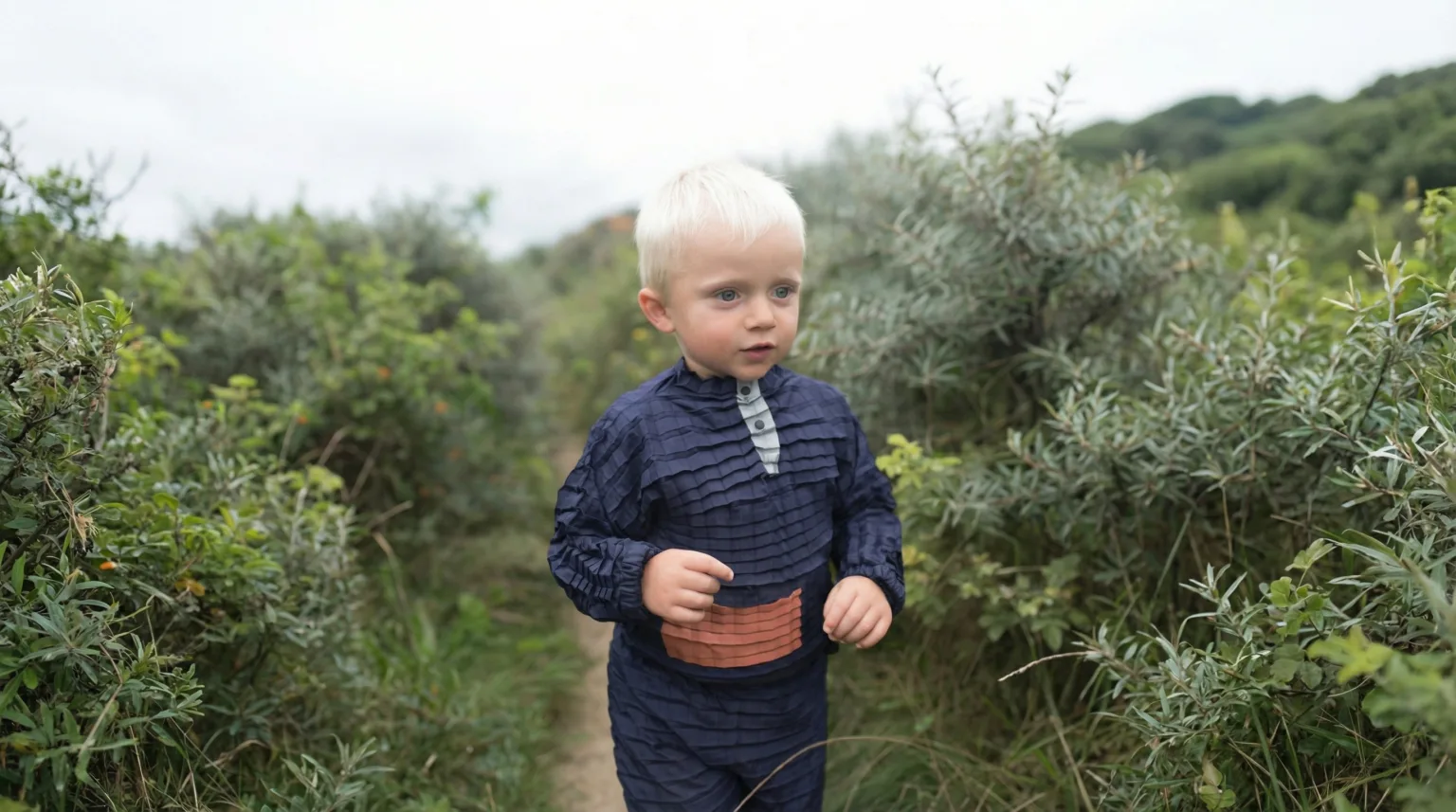
A child grows. Their clothes panic. So does your budget.
Every growth spurt triggers the same ritual: drawers that suddenly feel too small, “emergency” purchases, stacks of almost-new garments, and a strange feeling that we’re feeding an industry built on permanent shedding.
Then I discovered Petit Pli.
Not a “fashion brand,” at least in their own framing: a London-based material technology company led by engineers and designers. (Petit Pli)
Their idea is almost cheeky: clothes that expand up to seven sizes. (Petit Pli)
The real insight: innovation isn’t a feature — it’s a structure
Many companies try to optimize the absurd.
They polish the marketing. They speed up logistics. They segment product lines. They “streamline” purchasing.
Petit Pli does something else: they change the mechanism.
Instead of accepting the cycle “buy / wear a few times / discard / buy again,” they redesign the object so it absorbs change.
That’s when innovation becomes meaningful: when it doesn’t get added to the system… but replaces it.
How it works (without magic)
Petit Pli relies on a patented pleated structure designed to open and close to accommodate growth. (Petit Pli)
The story gained early visibility because the idea came from an unusual background: Ryan Mario Yasin won the James Dyson Award UK 2017 with Petit Pli. (James Dyson Award)
Back in 2017, WIRED described a pleated material that expands in length and width to cover multiple sizes. (WIRED)
So yes: the “innovation” isn’t a trendier print. It’s a geometry shift.
“Versatile”: sustainability as an outcome, not a slogan
On its “About” page, Petit Pli states that the Versatile range is made from recycled PET plastic bottles, turned into ripstop fabric, rainproof, Oeko-Tex certified, and machine-washable at 30°C. (Petit Pli)
Their blog reiterates the core claim: “grow with me” garments expand up to seven sizes, reducing replacements. (Petit Pli)
Two takeaways:
- Materials matter — but structure matters more. You can “green” a product and still be trapped in a disposable model.
- Structure makes restraint natural: fewer purchases becomes a logical consequence, not a moral lecture.
About the certification they mention: OEKO-TEX STANDARD 100 is a label for textiles tested for harmful substances. (OEKO-TEX)
And if you see “bluesign” in textiles, it’s an organization working with the industry to reduce impacts and support more responsible production. (bluesign)
Why this kind of innovation quickly becomes “obvious”
In my book, chapter 4, I reference an idea that fits perfectly here via the Kano model: a winning innovation often starts as “wow,” then becomes expected… and eventually becomes essential.
Petit Pli follows that path:
- Today: “Wow, it expands!”
- Tomorrow: “Why would I pay for clothes that don’t adapt?”
- Next: “A brand without this is behind.”
A useful signal: when your solution makes an absurdity disappear, it can shift from “nice” to “non-negotiable.”
The strategic question behind Petit Pli (and why it matters beyond fashion)
The goal isn’t “make expandable clothes.”
The goal is: design an offer that reconfigures itself when the main variable moves.
In kidswear, the moving variable is obvious: size.
In other industries, the critical variable might be:
- energy (price, availability, constraints)
- climate (heat, humidity, extreme events)
- usage (mobility, remote work, new routines)
- regulation (traceability, composition, repairability)
- trust (proof, transparency, compliance)
When that variable accelerates, “moving faster” becomes the reflex… often insufficient.
A better bet: a system that absorbs change.
A simple test for your product
Take your offer and answer three questions:
- Which variable moves fastest in your market?
- What breaks for customers when it moves?
- If you removed the absurdity at the root, what structure would replace your current “optimizations”?
Structural innovations create a distinctive feeling: they make you think the problem should never have existed.
Petit Pli does exactly that.
👉 In your industry, which variable moves so much that your offer should reconfigure itself automatically?
References
(Petit Pli) = https://shop.petitpli.com/pages/about-petit-pli
(Petit Pli) = https://shop.petitpli.com/blogs/news/grow-with-me-clothes-petit-pli
(James Dyson Award) = https://www.jamesdysonaward.org/news/petit-pli-named-2017-uk-winner/
(Circle Economy) = https://knowledge-hub.circle-economy.com/article/18226
(WIRED) = https://www.wired.com/story/james-dyson-winner-petit-pli-children-clothing
(OEKO-TEX) = https://www.oeko-tex.com/en/our-standards/oeko-tex-standard-100/
(bluesign) = https://www.bluesign.com/