When a game stops being just entertainment
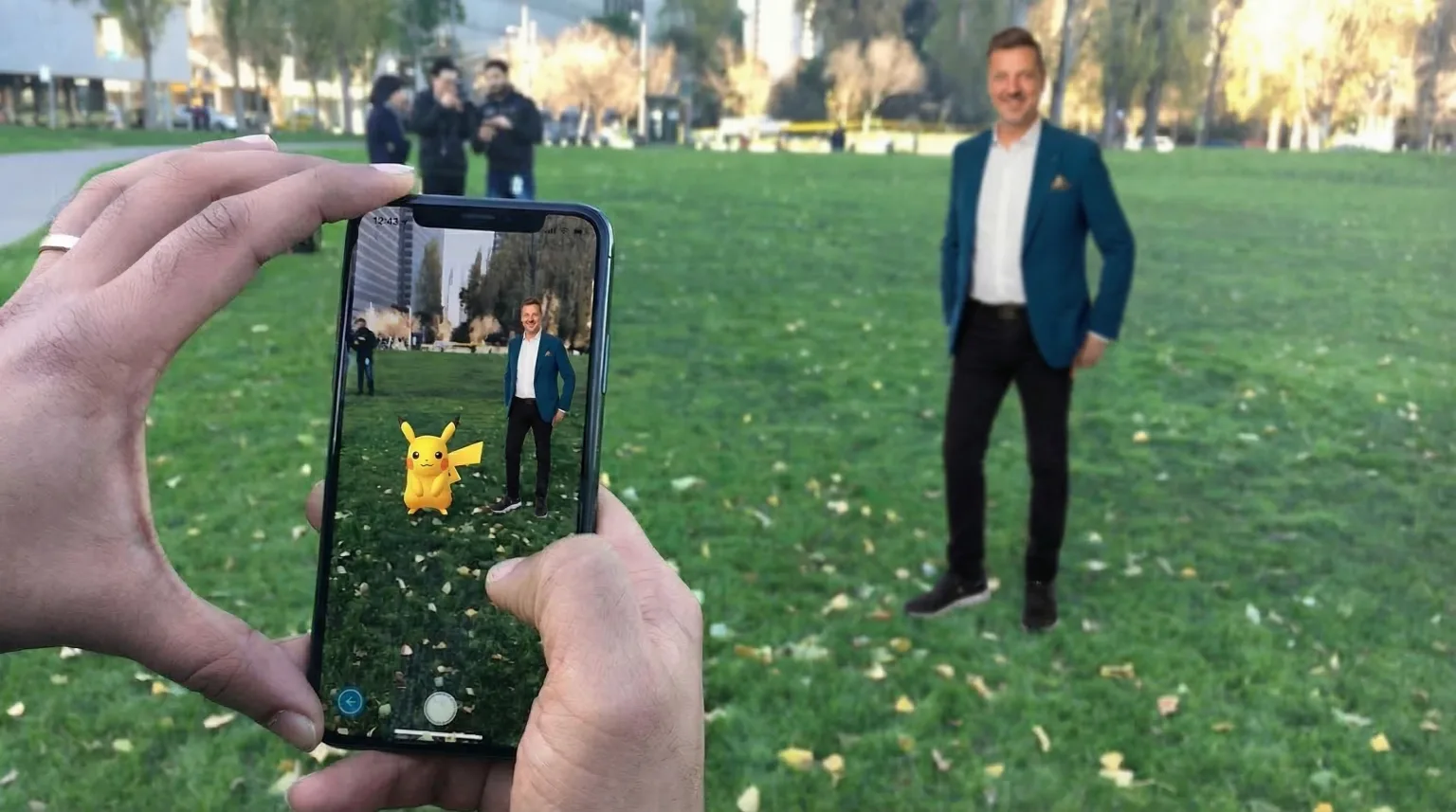
For years, many people saw Pokémon GO as a spectacular mobile entertainment success. That reading was understandable. The app was visible, viral, social, and instantly legible. You walked, hunted, collected, and shared. The interface told a simple story: an augmented reality game turning the city into a playground.
But major strategic shifts often arrive in disguise. They look like a familiar product while quietly accumulating a far more decisive asset underneath.
That is what makes the Niantic story so compelling. In March 2025, the company announced the sale of its games division to Scopely and the spinout of Niantic Spatial, a company focused on geospatial AI. In other words, behind the visible success of the game, another trajectory had already been developing: one centered on mapping the physical world and helping machines understand it (Reuters, Niantic Labs).
The real move may have been infrastructural
What stands out here is not only the original product idea. It is the depth of the strategic move.
Niantic Spatial now says it is building a Large Geospatial Model based on more than 30 billion posed images gathered across millions of locations worldwide. Its stated ambition is clear: to create a living model of the real world that humans and machines can query, understand, reconstruct, localize, and use (Niantic Spatial, Niantic Spatial).
At that point, the conversation changes category. This is no longer only about user engagement. It is about a spatial intelligence layer. And in the economy now taking shape, that layer matters. The systems that understand the physical world best will not only place virtual creatures on a screen. They will support glasses, robots, logistics systems, contextual assistants, maintenance workflows, immersive environments, and industrial interfaces.
That is often how advanced players pull ahead: while the market debates the visible product, they are capitalizing the invisible infrastructure.
What players actually helped build
Precision matters here. Niantic has explicitly said that its geospatial model uses voluntary scans of public real-world locations contributed by players. The company also clarified that simply walking around while playing does not train the model; the relevant input comes from dedicated scanning and mapping features (Niantic Labs).
Pokémon GO began rolling out AR Mapping tasks in 2020. Some tasks asked players to scan a PokéStop or nearby location, and the feature required user opt-in. Niantic explained at the time that those videos would help generate dynamic 3D maps of places in order to improve augmented reality experiences (Pokémon GO, Niantic Labs, Pokémon GO Help Center).
So the visible promise was play. The deeper value was accumulation.
That is where leaders need sharper strategic eyesight: some companies are not merely monetizing an experience. They are training a future operating layer for the physical world.
When entertainment becomes training data for machines
The shift becomes even clearer when you look at the use cases Niantic Spatial is now putting forward. In 2025, the company was already showcasing delivery verification, spatial collaboration, and robotics-related demos. In March 2026, it formalized a partnership with Coco Robotics, stating that geospatial AI and its Large Geospatial Model are becoming essential infrastructure for robots that must navigate the real world (Niantic Spatial, Niantic Spatial).
Yesterday, users were catching creatures.
Today, the same underlying logic of scanning, spatial alignment, and contextual understanding is helping machines read and move through real environments.
That is why this story goes far beyond gaming. It reveals a larger economic pattern: the interface captures attention, the infrastructure captures long-term value.
The mistake many companies still make
A lot of organizations are still looking at AI through the wrong lens.
They ask: which tool should we buy?
The more strategic players ask something else: what cognitive raw material are we quietly accumulating?
That raw material can take many forms: behavioral data, operational signals, location context, workflow history, environmental images, decision patterns, expert corpora, or field feedback.
The issue is not only automation speed. The issue is structural position.
Niantic sold a game. At the same time, it built the capability to model the physical world. That is exactly the kind of shift many leadership teams fail to notice, because they remain focused on the visible product, the marketing narrative, or the immediate revenue curve.
Meanwhile, someone else is building the upper layer.
Or the lower one.
And very often, that is the layer that ends up dominating.
What this says about innovation now
Innovation no longer always arrives with a lab coat, a keynote, or a theatrical launch. Sometimes it shows up as a game, a convenience, a reward loop, a harmless-looking feature, or a gamified task.
What matters is not only what the user thinks they are consuming.
What matters is what the company is learning, structuring, consolidating, and defending over time.
In my book, chapter 14, I insist on looking at artificial intelligence not as a gadget, but as a strategic field of lucidity, method, and positioning. The Niantic case illustrates that beautifully: the central issue is no longer just “which technology is being used?” It becomes “what structural advantage is being created while everyone else is looking somewhere else?”
That may be one of the most useful reflexes to develop in 2026.
In your industry too, there may already be a seemingly harmless “game” turning into critical infrastructure.
Spotting it early saves time.
Understanding it builds lucidity.
Using it may help win the next competitive battle.


References
(Reuters) = https://www.reuters.com/markets/deals/pokemon-go-maker-niantic-sell-game-division-saudi-owned-scopely-35-billion-2025-03-12
(Niantic Labs) = https://nianticlabs.com/news/niantic-next-chapter/
(Niantic Labs) = https://nianticlabs.com/news/largegeospatialmodel/
(Pokémon GO) = https://pokemongolive.com/post/armapping-researchtask/
(Niantic Labs) = https://nianticlabs.com/news/realityblending-announcement/
(Pokémon GO Help Center) = https://niantic.helpshift.com/hc/en/6-pokemon-go/faq/2752-what-are-ar-mapping-tasks/
(Niantic Spatial) = https://www.nianticspatial.com/blog/niantic-spatial-day-one
(Niantic Spatial) = https://www.nianticspatial.com/blog/gdc-2025-niantic-spatial-computing-ar-recap
(Niantic Spatial) = https://www.nianticspatial.com/en/blog/coco-robotics
(Niantic Spatial) = https://www.nianticspatial.com/