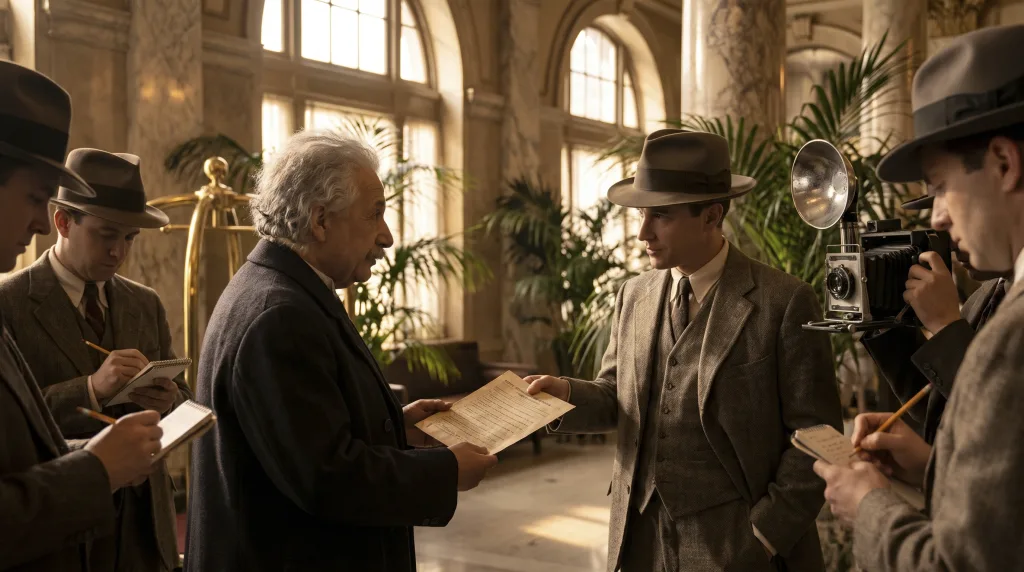
Paris, October 1998. The Paris Motor Show. On one of the stands, an engine designer from the Corbières region presents a taxi that runs on compressed air. His name is Guy Nègre. He spent five years at Renault squeezing more power out of the R8 Gordini. In 1991, he founded MDI around an idea that fits in one sentence: move a car by releasing air stored under pressure, without burning anything. He announces 200 kilometers on air alone, 800 in a hybrid version, and a three-minute refill (Wikipédia).
Twenty-eight years later, no journalist has been able to verify those figures. In 2007, Tata Motors commits to industrializing the concept and plans a factory in France, then the project stalls. In 2015, AirPod subscribers are still waiting for their vehicle, and for their money (Wikipédia).
Keep this story in mind. We will need it.
Musk, compressed air and our nostalgia
October 15, 2026, Texas. Elon Musk unveils his new Roadster. Two carbon-fiber tanks hold 600 liters of compressed air that feed ten nozzles. The car jumps over parked Teslas, drives upside down on a ramp and does a flip (MercoPress).
My first reflex was to think of Guy Nègre. Thirty-five years after MDI was founded, Musk seemed to prove him right. Then I read the technical details. The Roadster’s air provides bursts of a few seconds, to jump and correct its trajectory (MercoPress). Propulsion stays electric, on a battery. Musk added a stunt to an electric car and took nothing from Nègre’s engine.
That reflex interests me more than the car. We love stories about misunderstood French geniuses whose idea is one day picked up by an American. They comfort us. They also spare us from asking why so many of our inventions remain inventions.
In my book, I defend a distinction that many executives find pedantic. An invention is an idea that works on a test bench. An innovation is an invention that finds its market and creates value. Between the two lie measurement, industrialization, price and customer trust. Nègre’s engine never passed the test of independent measurement. It remained an invention (My book, chapter 3).

Assumptions are dangerous. Kill them with experimentation, as early as possible. Guy Nègre asked his subscribers to believe before measuring. They are the ones who paid the price.
What the magnet hides
Let’s leave compressed air behind. The serious issue sits under the hood of every electric car.
Most electric motors use permanent magnets to turn electricity into motion. These magnets contain rare-earth alloys such as neodymium, praseodymium or dysprosium (Connaissance des Énergies).
One clarification, because the confusion keeps coming back: batteries do not contain rare earths. Lithium, nickel and cobalt raise their own extraction and dependency problems, but they are different metals on different supply chains. The rare-earth bottleneck sits in the motor.
China spent decades building its position in mining and refining these metals. The United States noticed late. Donald Trump’s sudden interest in rare earths, including in Ukraine, is part of a broader effort to reduce American dependency on Chinese exports (LSE).
Meanwhile, part of the answer already existed in France.
2012: the lead nobody looked at
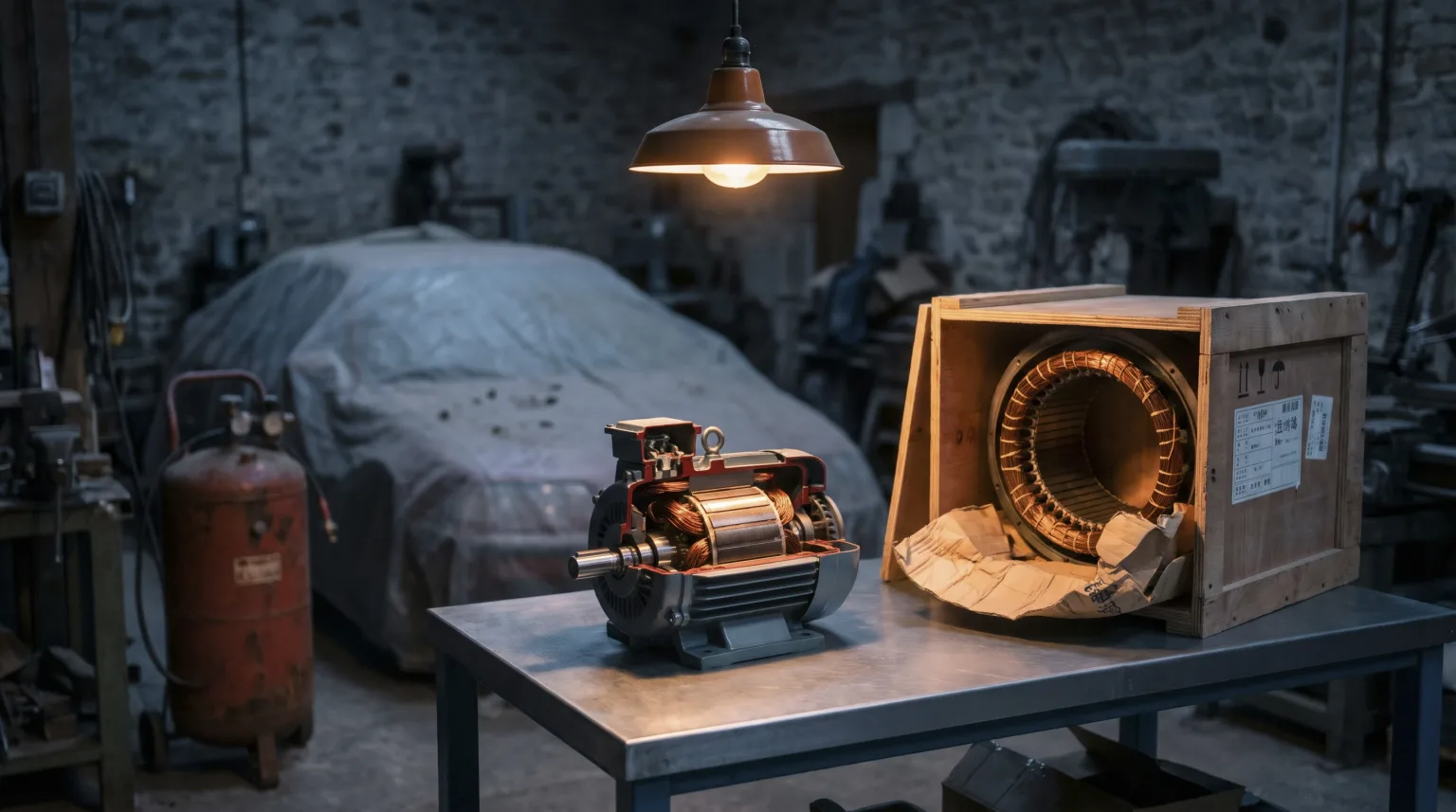
Renault has been building rare-earth-free motors since 2012 (electrive). The principle is called a wound rotor. Instead of magnets, copper coils carrying a current create the rotor’s magnetic field. The ZOE ran on this motor while most carmakers piled up neodymium magnets (Connaissance des Énergies).
In 2021, Renault, Valeo and its joint venture Valeo Siemens eAutomotive sign an agreement to go further: a 200 kW motor without rare earths, designed and produced in France, ready in 2027. Renault develops the rotor, Valeo the stator. The three companies present themselves as the first to produce this type of motor at scale (Connaissance des Énergies).
In late 2023, the motor gets a name: E7A. Renault and Valeo describe it as 30% more compact, at equal power, than the motors in the current electric Mégane and Scénic (Automobile Propre). Renault stresses the strategic argument: the wound rotor secures supply and makes the carmaker independent from rare-earth-producing countries. The group promotes the project as “innovation made in France” (electrive).
From 2012 to 2026, that is a fourteen-year lead on a technology Washington now treats as a national security issue. On paper, France had won.
November 2025: the stator goes to China
On November 10, 2025, Reuters publishes a report that changes how this story reads. According to two sources close to the project, the E7A is no longer being developed with Valeo. Renault is taking it in-house across the whole value chain, with one exception: the stator could be bought from a Chinese supplier (Reuters).
The reason is cost. Chinese suppliers offer much cheaper stators, and Renault wants Ampere, its electric subsidiary, to compete with Chinese carmakers. One source adds that producing the stator in France is being studied, even with a Chinese supplier (Journal de l’Automobile).
In February 2026, Renault confirms it will use China-sourced components for the E7A. The motor will be assembled in Cléon, and STMicroelectronics will supply the silicon-carbide modules for the inverter (electrive).
Valeo, for its part, keeps going. The supplier has teamed up with Germany’s Mahle to develop its own magnet-free motor, called iBEE, also expected around 2028 (Journal de l’Automobile).
To sum up. France solved the rare-earth problem. Then, over price, it handed a core part of the motor to the very country it wanted to become independent from. The dependency moved: from the mine to the factory.
Let’s defend Renault for a minute
I will be honest with you, because easy outrage does not interest me.
A sovereign motor that costs too much does not sell. If an electric Renault costs several thousand euros more than a Chinese competitor of comparable quality, the buyer picks the Chinese car. And the Cléon plant closes anyway. An Ampere executive who refused a cheaper stator for the sake of the flag would take a real risk for the company and its employees.
The rotor, the part that removes the rare earths, stays at Renault. Assembly stays in Normandy. The know-how built since 2012 stays in France, even if the stators come from China.
All of this is true. And I stand by my diagnosis.
A vision that stops at the purchasing department
In my book, I devote an entire pillar to vision, mission and strategy (My book, chapter 8). A vision has a cost. If it gives way at the first line of a purchasing spreadsheet, it is a slogan.
Renault presented the E7A as an answer to dependency on rare-earth-producing countries. Two years later, an economic trade-off brings part of that dependency back through another door. Employees, customers and partners see the gap. My rule of trust fits in one sentence: I say what I do, and I do what I say. Every gap between announcement and action weakens the credibility of the next announcement.
This pattern goes beyond the car industry. The research team finds an elegant solution. The executive committee applauds. The solution goes into production, and each purchasing decision, taken on its own, is reasonable. Added up, these decisions drain the advantage of its substance.
Nobody betrayed anybody. What was missing was someone to ask, at the moment of the trade-off, a question of vision: does this saving destroy the reason we innovated in the first place?
Guy Nègre had an idea without proof. Renault had the proof, and a fourteen-year lead. Both stories stumble at the same point: the move from invention to lasting innovation, when you have to industrialize without disowning what you invented.
And in your company?
Take five minutes. Rate your company from 0 to 5 on this statement: “When we innovate, our purchasing and industrialization decisions protect the advantage we created.”
Then look for a concrete example. An in-house technology whose critical component went to the cheapest supplier. A project presented as strategic, then cut line by line by financial control. If you find that example in under a minute, your score is probably too high.
The essentials
Remember these four points:
- An invention that nobody can measure independently remains an invention. Guy Nègre’s compressed air never passed that test.
- Musk’s Roadster uses compressed air for bursts of a few seconds. Its propulsion stays electric.
- Renault has mastered the rare-earth-free motor since 2012. France’s technological lead was real.
- Removing rare earths while buying the stator from China moves the dependency instead of removing it.
A technological lead is won in the lab and often lost in trade-offs. Next time you sign off on a saving on a critical component, ask what it costs your advantage. Innovate or agonize: the choice is yours!

References
- (My book) https://philippeboulanger.com/book/
- (Wikipédia) https://fr.wikipedia.org/wiki/Guy_N%C3%A8gre
- (MercoPress) https://en.mercopress.com/2026/10/18/tesla-s-new-roadster-uses-compressed-air-and-fans-to-jump-and-drive-upside-down
- (Connaissance des Énergies) https://www.connaissancedesenergies.org/afp/renault-et-valeo-sassocient-pour-concevoir-un-moteur-electrique-sans-terres-rares-220210
- (LSE) https://blogs.lse.ac.uk/usappblog/2025/03/25/why-is-trump-suddenly-interested-in-rare-earths-its-bigger-than-ukraine/
- (electrive) https://www.electrive.com/2025/11/11/chinese-supplier-instead-of-valeo-renault-scraps-plans-for-e7a-electric-motor
- (electrive) https://www.electrive.com/2026/02/05/renault-confirms-use-of-china-sourced-components-for-e7a-electric-motor/
- (Automobile Propre) https://www.automobile-propre.com/articles/renault-progresse-sur-la-conception-dun-moteur-electrique-unique-au-monde/
- (Reuters) https://www.bnnbloomberg.ca/business/2025/11/10/renault-seeking-chinese-rare-earth-free-motor-supplier-sources-say
- (Journal de l’Automobile) https://journalauto.com/constructeurs/moteur-ea7-renault-pourrait-evincer-valeo-au-profit-dun-equipementier-chinois/