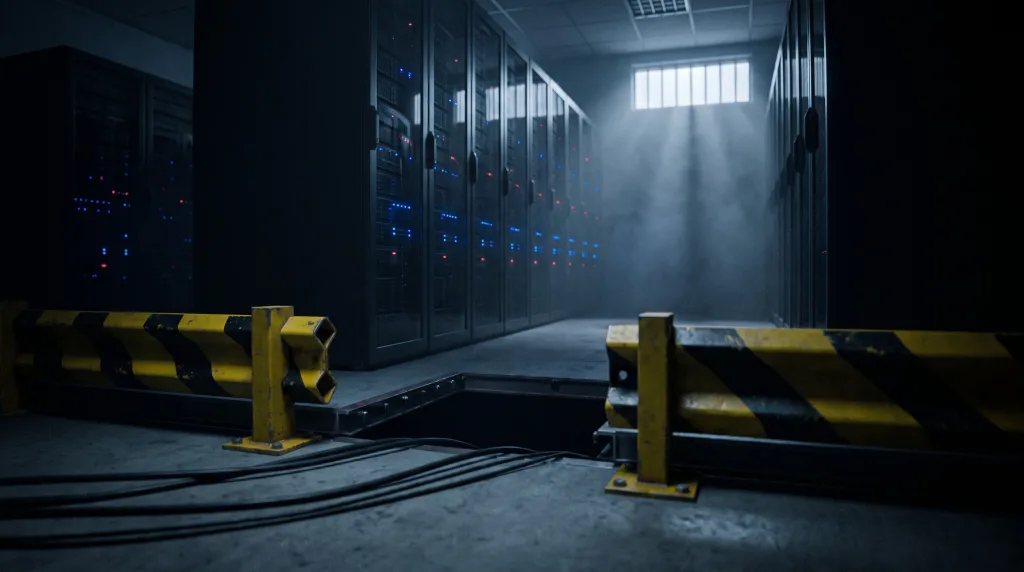
Lyon, a Tuesday in September. Oscar runs HR studies for a mid-size industrial group. He watches the screen of his workforce management system where an AI module has just recalculated, in twelve seconds, a schedule his team used to spend two days stabilizing. He should feel relieved. He feels uneasy.
“They sold me this as a tool that would give me back my time,” he tells me over coffee. “Two months later, my team still works the same number of hours. We just changed what they do with those hours.” Oscar has just discovered, without naming it yet, the real subject of this article.
The broken promise: AI doesn’t save time, it reveals what you do with it
You were sold artificial intelligence as a time-saving machine. Here’s why that’s wrong, and why it’s good news for the HR function.
The uncomfortable fact: a lot of AI has been deployed inside organizations, and very little measurable effect has come out of it. A National Bureau of Economic Research study covering 6,000 executives across the United States, the United Kingdom, Germany and Australia found that two thirds of them report using AI, but only 1.5 hours a week on average, and nearly 90% say it has had no measurable impact on their company’s employment or productivity over the past three years (Génération NT).
This is the productivity paradox economist Robert Solow described in the 1980s: “you can see the computer age everywhere but in the productivity statistics.” Forty years later, generative AI is repeating the same pattern.
Here is the reframe that changes everything, and applies directly to your workforce management system: artificial intelligence doesn’t save time, it reveals your organization’s relationship with time. The time “freed up” by automating a task doesn’t vanish into thin air. By default, it feeds the existing bureaucracy, unless someone deliberately decides to spend it differently: doing more of the same, doing it better, or doing something else entirely. That decision isn’t technical. It’s managerial, and squarely an HR matter (My book, chapter 14).

What AI actually changes in workforce time and activity management
The key message is simple and counterintuitive: the job doesn’t disappear, its old grammar does. The HR professional in charge of workforce scheduling doesn’t move from doer to unemployed. He moves from doer to framer, arbiter, and checker of what AI proposes.
Concretely, inside a workforce management system, AI can now pre-fill and suggest schedules, forecast workload and absenteeism, flag time-tracking anomalies, assist compliance checks on working hours and rest periods, and answer employees’ routine questions about leave or pay through a conversational assistant. This mapping to the scheduling domain remains an extrapolation of the general thesis, to be validated in your own context.
What AI does not do deserves equal clarity: it does not settle a labor-relations arbitration that carries legal responsibility for the company, and it does not replace human judgment on an edge case, the employee whose personal situation fits no field in the software. That is exactly where the value of the HR job shifts.
The International Labour Organization confirms this reading at a global scale. Its 2025 update on generative AI and jobs concludes that most positions will be transformed rather than eliminated, with a mean automation exposure score of 0.29 across analyzed tasks, and stresses the need for a managed transition through social dialogue rather than an imposed one (ILO).
This transformation hits repetitive tasks, data collection, and elementary data processing hardest, precisely the historical core of the time-management job. The McKinsey Global Institute puts the share of US work hours that could be automated by 2030 at roughly 30% with generative AI, up from 21.5% without it, with a particularly strong effect on administrative support functions (McKinsey Global Institute).
From stock expertise to flow expertise: what it means for hiring
Here is a distinction I give every HR team I work with: stock expertise is what you know today. Flow expertise is your capacity to keep adapting to what changes tomorrow.
For decades, payroll and workforce management teams were hired and evaluated on their stock expertise: fine-grained knowledge of labor law, collective agreements, the subtleties of a working-time modulation clause. That knowledge still matters. It’s no longer enough.
AI absorbs a growing share of repetitive stock expertise. What becomes scarce, and therefore valuable, is flow expertise: the ability to question a process, to catch that an AI-generated schedule quietly breaks a compensatory rest rule the software never modeled, to train colleagues on a new tool without triggering panic. Hiring for flow expertise means hiring for curiosity and adaptability as much as for the diploma on the wall.
The World Economic Forum quantifies the scale of this shift globally: its Future of Jobs Report 2025 projects 170 million jobs created and 92 million displaced by 2030, a net gain of 78 million, with disruption touching 22% of jobs worldwide. That net figure does not balance out role by role inside your own scheduling team: it translates into a reshuffling of expected skills, exactly what the shift from stock to flow expertise describes (World Economic Forum).
Why it almost always fails, and rarely for technical reasons
The failure of an AI project in workforce management is almost always human and managerial, rarely technical. A bad prompt is usually just a bad brief in disguise. Whoever can’t brief humans well will fail with AI too.
AI works as an amplifier: it strengthens healthy organizations and exposes the structural weaknesses of the others. Faced with a schedule-approval process that was already broken, it industrializes the mess instead of fixing it. A process that already generated tension before AI will generate more of it, faster.
The most instructive example remains a transformation imposed without dialogue: a route reorganization driven by AI, announced and then imposed with no prior consultation, that ended in a labor dispute. The tipping point wasn’t the tool. It was the absence of an answer to the three survival questions every employee asks when facing change: what does this change for me? Am I obsolete? Is my job at risk?
A documented, public case illustrates the same mechanism in the French workplace: when an organization defines its AI strategy behind closed doors and only informs employees at rollout, the reaction is rarely enthusiasm. That is what happened at La Poste, where an AI strategy set in July 2023 was only communicated to employees at deployment in January 2024, triggering a strike. The trust rule for employees is simple: I say what I do, and I do what I say. Break it, and every future announcement gets read with suspicion.
The pivot toward action fits in one sentence: AI is a trust project before it’s an IT project.
The concrete path: a 5-step cycle you can apply to your own scheduling project
Here is the sequence I hand to teams starting an AI adoption project in workforce management: an iterative loop, replayed every cycle, rather than a one-off communication plan you check off once.
First, vision and sentiment: decide whether and how AI should shift your HR strategy, then measure the starting climate in your teams before touching a single setting in the software.
Second, communication: answer the three survival questions first, before talking about the tool, before talking about features, before talking about time savings.
Third, an ambassador team: build a small, cross-functional group of early adopters, guided by two simple, non-negotiable questions: how does AI increase my current productivity in my own role? What can I do now that was impossible before? Any use of AI that answers neither question is a distraction (My book).
Fourth, deployment and measurement: capitalize on the ambassador team’s feedback, measure before, during and after deployment, and never confuse activity with results. A dashboard showing “500 schedules generated by AI” says nothing about the quality of those schedules or the time actually recovered by the teams.
Fifth, re-measure sentiment: close the loop, adjust, start again. Adopting AI in HR is never a finished project, it’s a permanent learning cycle.
A recent barometer on 2026 HRIS trends confirms the gap between intention and reality: 73% of organizations now see AI as a top HR priority, yet only 5% have genuinely integrated it end to end, while 36% are in active deployment. On the time and activity side alone, 70.5% of vendors already offer intelligent scheduling, with reported gains of 80% on perceived HR productivity and 60% on administrative costs (RH Magazine).
Read these numbers with the same discipline as any other: realistic for whoever measured them, verifiable only once you measure them yourself, inside your own organization.
Time is a choice, not a gift
Back to Oscar. His workforce management software appeared to hand him back several hours a week on schedule approval. The real decision he now faces isn’t technical: it’s choosing, deliberately, what his team does with that recovered time, and deciding who in the organization has the authority to make that call.
It’s a question of organization. It’s a question of trust. Which makes it an HR matter through and through.
The risk isn’t experimenting and getting it wrong. The risk is standing still while the rest of the organization moves ahead without you.
The essentials
Remember three things:
- The time-management job doesn’t disappear with AI, its grammar changes: from doer to framer, arbiter, and checker.
- An AI project in workforce management almost always fails for managerial reasons before technical ones: answer the three survival questions before talking about the tool.
- Measure before, during and after deployment, and never confuse the activity AI generates with the results it delivers for the organization.
The path isn’t fully mapped, and it gets built together. If this touches your organization, now is the time to talk about it openly with your teams, before AI does it for you.

References
- (My book) https://philippeboulanger.com/book/
- (Génération NT) https://www.generation-nt.com/actualites/ia-productivite-paradoxe-solow-economie-etude-2071004
- (International Labour Organization) https://www.ilo.org/publications/generative-ai-and-jobs-2025-update
- (McKinsey Global Institute) https://www.mckinsey.com/mgi/our-research/generative-ai-and-the-future-of-work-in-america
- (RH Magazine) https://rhmag.fr/2026/01/30/tendances-sirh-2026/
- (World Economic Forum) https://www.weforum.org/press/2025/01/future-of-jobs-report-2025-78-million-new-job-opportunities-by-2030-but-urgent-upskilling-needed-to-prepare-workforces/