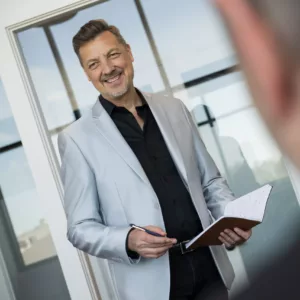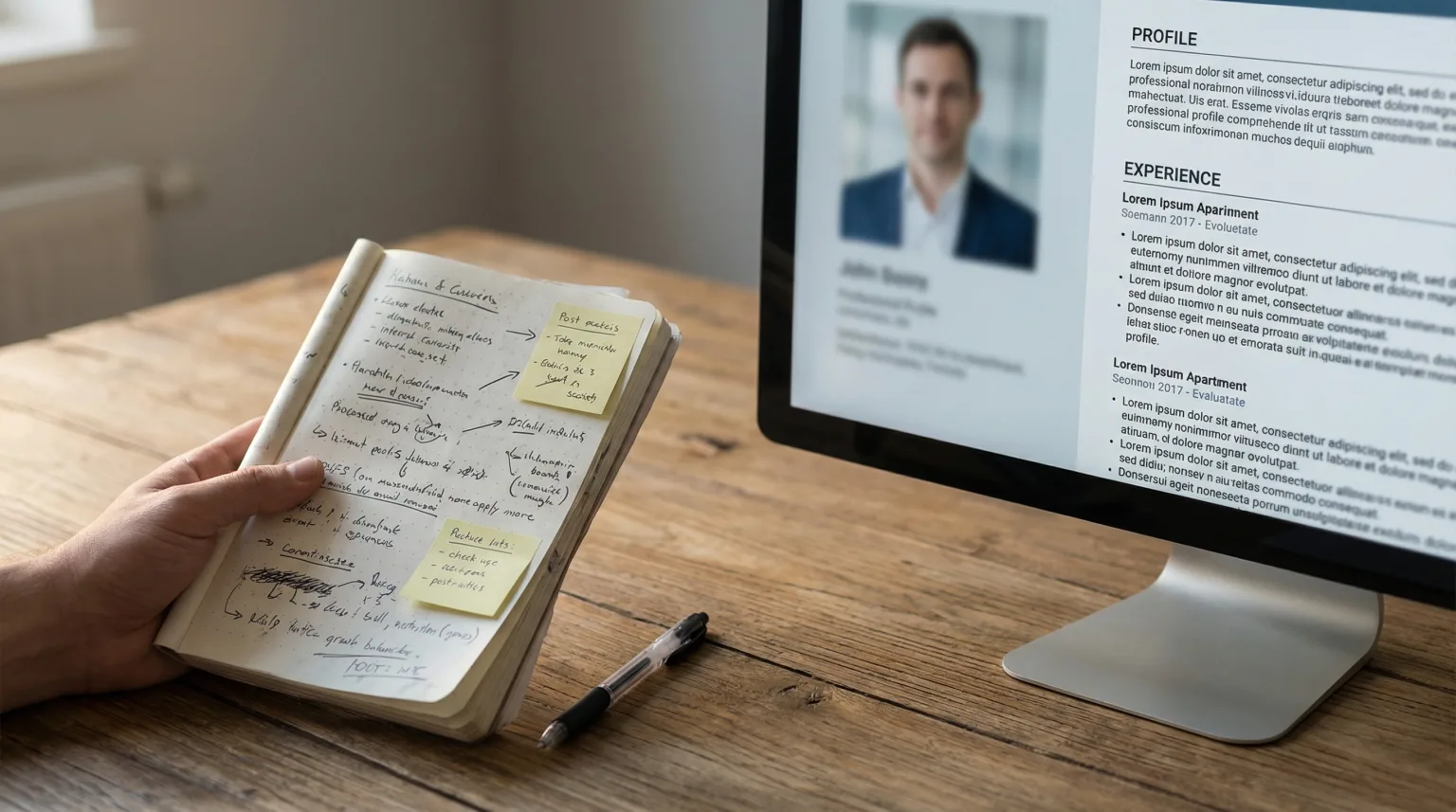
This morning, I came across a LinkedIn profile that looked flawless. Too flawless.
Studio headshot. Perfect lighting. Polished skin. “Executive” framing.
Crisp copy. Clean rhythm. Impeccable tone.
Everything felt controlled.
And that’s exactly what triggered my doubt: it felt like AI.
Not because it was bad.
Because it was too clean.
The shift: when proof no longer proves anything
For years, we relied on “signals” to quickly assess people online:
- great writing = competence
- professional photo = credibility
- executive tone = seriousness
- consistent branding = mastery
The issue: those signals are now cheap to replicate.
Le Journal du Net describes the turning point clearly: AI has destroyed the value of our old indicators. When a machine can produce the same “proof” (perfect headshot, polished storytelling, calibrated voice), the proof stops differentiating people (Journal du Net).
So we enter a paradox:
the more your profile matches “best practices,” the more it can look… generated.
Perfection becomes a mass aesthetic
[Inference] What used to be a competitive advantage becomes a template. And a template quickly becomes background noise.
On LinkedIn, perfection has become a standardized package: “corporate portrait + mission statement + values + call-to-action.” Today, that entire pack is available to anyone through generative AI.
That’s also why LinkedIn is investing heavily in verification: the platform is trying to reintroduce trust signals that are harder to fake, because appearance alone is no longer enough (LinkedIn Newsroom) (LinkedIn Help).
So what do we do? Stop chasing perfection
[Inference] Yes—if your goal is to be credible and memorable, not just “presentable.”
Because perfection now belongs to machines.
Humans stand out where things overflow.
What becomes valuable again:
✅ A recognizable voice (even if it’s unusual)
Not a “professional” voice—a distinctive one. A rhythm. Words you naturally use. A point of view that’s yours.
✅ Real vulnerability (not optimized)
“I failed here.” “This cost me.” “I don’t master this yet.” Not for drama—for a rare signal: unoptimized honesty.
✅ Real-world presence (field, lived experience, meetings)
Platforms can be flooded with perfect content. But lived experience—dated, situated, concrete—remains harder to simulate consistently.
✅ The ability to make people feel something
We’re not judged only on objective quality, but on emotional impact. Trust is built there: in what we trigger, not what we display (Edelman).
The comeback of “costly” signals: verification, traceability, proof
A new layer of harder-to-copy signals is emerging:
- LinkedIn identity / workplace / education verification (LinkedIn Help)
- “Verified on LinkedIn” signals extending outside LinkedIn via an API and partners (LinkedIn Developers) (The Verge)
- Attaching verified identity to content through “Content Credentials” systems (Adobe Blog)
[Inference] The subtext is clear: trust won’t be restored with more polish. It will require proof mechanisms—and more humanity.
My book: skills that resist “cosmetic automation”
In my book (chapter 4), I list skills that resist “cosmetic automation”: curiosity, empathy, boldness, creativity, self-questioning, and bias for action.
In other words: what’s not just a clean deliverable, but a posture, a choice, a way of moving through the world.
AI can manufacture content.
It can’t manufacture your path.
A simple test: which “human flaw” makes you more credible?
If you want to become memorable again, stop chasing the perfect profile. Chase the human trace:
- a less polished sentence, but true
- a precise example with context, cost, and consequences
- an opinion that commits you (and won’t please everyone)
- a style that belongs to you—even if it feels “strange”
👉 Which human “flaw” will you revisit to become memorable again?
References
(Journal du Net) = https://www.journaldunet.com/management/efficacite-personnelle/1547949-comment-l-ia-a-rendu-nos-anciens-signaux-obsoletes-et-pourquoi-l-imperfection-redevient-un-avantage/
(LinkedIn Help) = https://www.linkedin.com/help/linkedin/answer/a1359065
(LinkedIn Newsroom) = https://news.linkedin.com/2025/verified–linkedin-crosses-100m-member-milestone
(LinkedIn Developers) = https://www.linkedin.com/developers/news/featured-updates/q2-2025-verified-on-linkedin-api
(The Verge) = https://www.theverge.com/news/655233/linkedin-verification-external-platforms-adobe
(Adobe Blog) = https://blog.adobe.com/en/publish/2025/04/24/adobe-content-authenticity-now-public-beta-helps-creators-secure-attribution
(Edelman) = https://www.edelman.com/trust/2024/trust-barometer