Elon Musk fascinates because he expands the field of the possible
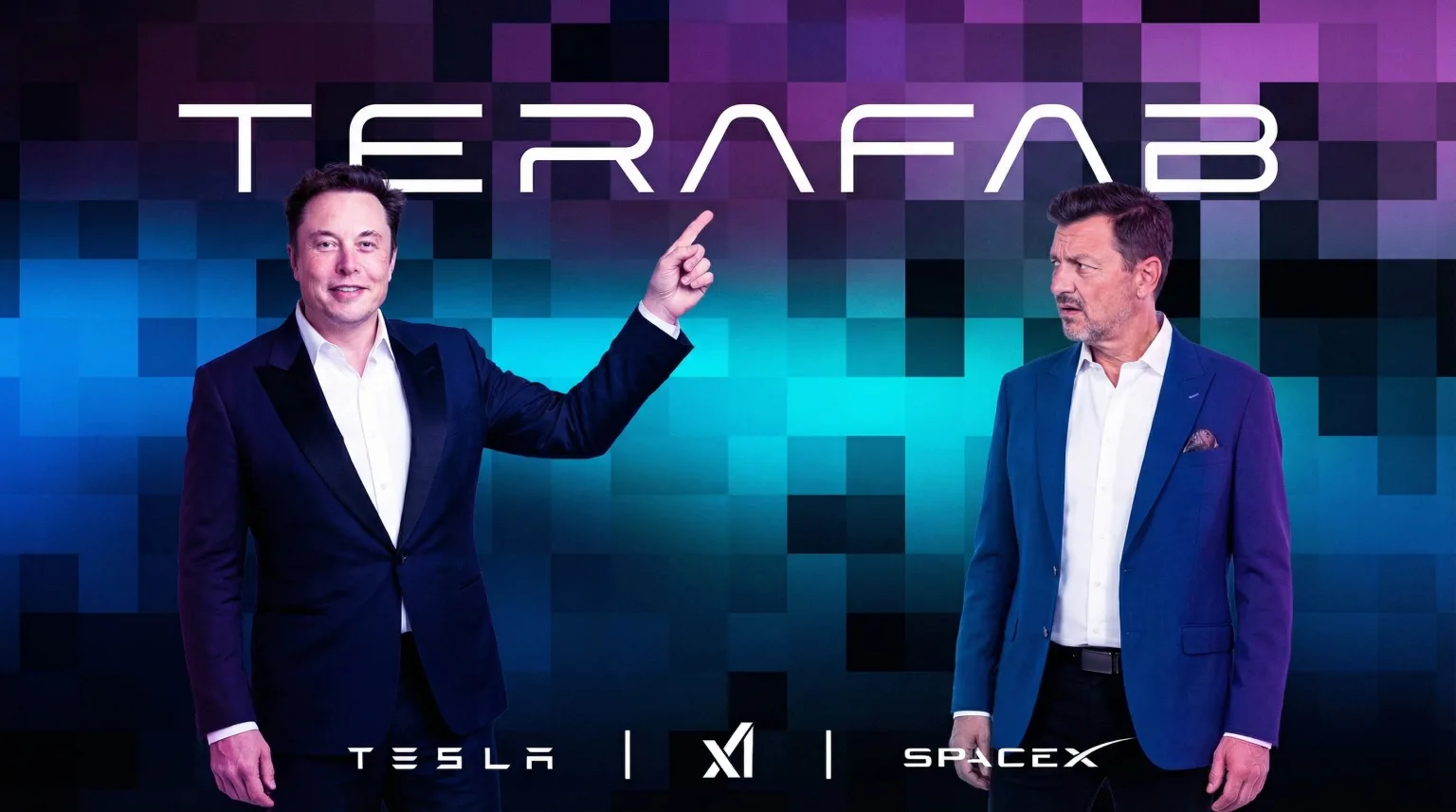
Elon Musk is one of the very few leaders who can describe, in a few sentences, a project that sounds like industrial science fiction. His Terafab announcement, presented as a massive chip-manufacturing effort in Austin for Tesla and SpaceX, fits that pattern perfectly. Reuters reported on March 22, 2026 that Musk described two advanced semiconductor factories in Austin aimed at Tesla vehicles, Optimus and space-related uses. Engadget also relayed the stated ambition of producing one terawatt of computing power in chips per year. At that scale, Musk is not merely selling a factory. He is selling industrial sovereignty, execution speed and the promise of defeating scarcity. (Reuters, Engadget)
That power of projection explains part of the myth. Musk almost never thinks at the scale of a product. He thinks at the scale of an entire system: cars, robots, compute clusters, satellites, energy, software, chips. That is also why Tesla’s recent $16.5 billion chip deal with Samsung did not stop him from almost immediately unveiling an even bigger internal manufacturing vision. Reuters reported in July 2025 that Samsung was set to produce Tesla’s future AI6 chips in Texas. In other words, even when Musk signs a huge supply agreement, he is already thinking about how to reduce dependence on it. (Reuters)
The problem begins when ambition starts acting like an exemption
This is where the analysis becomes more uncomfortable. Strategic brilliance does not cancel material constraints, legal constraints or human constraints.
On March 20, 2026, Reuters reported that a U.S. federal jury found Musk liable for misleading Twitter shareholders during the 2022 takeover, especially through statements about bots and the deal being “on hold.” In the Reuters report reviewed here, damages had not yet been finalized, but the verdict itself changes the frame: this is no longer just provocation or communication excess. It becomes a case where a leader’s public words can create major legal and financial exposure. (Reuters, Boursorama / Reuters)
The same tension appears in the French case involving X and xAI. Reuters had already reported in early February 2026 that French prosecutors expanded their investigation into X to include allegations linked to Grok and AI. Then, according to Le Monde and several French media reports, the Paris prosecutor’s office alerted U.S. authorities over suspicions of artificially inflating the valuation of X and xAI; BFMTV relayed Musk’s insulting reaction toward French prosecutors. The decisive point is not only the insult. The decisive point is that a company built on the hyper-visibility of its founder can also become dependent on his excesses. (Reuters, Le Monde, BFMTV)
Musk reveals a useful truth for every organization
The common mistake is to choose between two caricatures.
On one side, the camp of unconditional admirers: Musk would be living proof that everything is possible if you dare loudly enough.
On the other side, the camp of absolute accusers: Musk would be nothing more than chaos disguised as vision.
Both readings miss the core issue.
Musk shows that a leader can be both a tremendous accelerator of industries and a tremendous generator of systemic risk. He can make an entire sector move years faster while also exposing his companies to vulnerabilities that a more disciplined management style would have reduced. His case illustrates something I discuss in my book about the explosive mix of personal experience, power, survival and decision-making under pressure (my book, chapter 6).
In other words, giant ambition remains a strength. Imagined impunity becomes a poison.
Is everything really possible?
The serious answer is no.
Not everything is possible, even for Elon Musk.
Building a giant chip factory does not erase reality. Advanced fabs require enormous capital, extremely scarce talent, complex supply chains, critical equipment such as ASML tools, long timelines and severe operational discipline. Even supportive coverage of Terafab still makes clear that the project remains highly speculative in terms of schedule and execution. Reuters, Engadget and the specialist press describe a major announcement, not delivered capacity. (Reuters, Engadget, Tom’s Hardware)
What Musk masters better than almost anyone, then, is not magic. It is the combination of four levers:
A rare ability to narrate a credible future
Musk knows how to turn a future shortage into a mobilizing story. He does not simply say, “we will need chips.” He says, “the world will not produce enough chips for what we want to build.” That shift is decisive. It transforms industrial dependence into a historic mission. (Reuters)
An obsession with vertical control
Tesla, SpaceX, xAI, X: the same impulse appears again and again. Reduce suppliers, reduce intermediaries, reduce delays, reduce political and industrial dependence. It is not always elegant, and it is not always sustainable, but strategically the logic is coherent. (Reuters, Reuters)
A much higher conflict tolerance than average
Where many executives try to preserve their image, Musk appears willing to treat confrontation as a normal cost of strategy. That can accelerate execution. It can also degrade trust, attract litigation and generate permanent managerial noise. Recent trials and investigations show that this exposure is no longer marginal. (Reuters, Reuters)
An ability to make announcement feel like execution
This may be his most powerful weapon. In the attention economy, announcing something enormous already creates real effects: on markets, talent, partners, competitors and media. That psychological effect does not replace execution. It sometimes buys time for it. It sometimes enables it. It never guarantees it.
That is exactly why serious innovation requires more than a spectacular leader. It requires alignment among vision, strategy, organization, culture and execution capability. That is also what I develop in my book when I insist that a leader is never greater than the system he builds (my book, chapter 2).
What organizations should take from Musk
Admire boldness, not the illusion of omnipotence.
Admire the capacity to think big, not the temptation to believe oneself above rules.
Admire speed, but watch the quality of the frame.
Because a leader who can promise the impossible may open a future. A leader who can build the possible without destroying the frame creates something rarer still: durable innovation.
So Musk is neither just a genius nor just a madman. He is a full-scale stress test for our era. He shows how far vision can take a system. And at the same time, he reminds us that once power becomes too concentrated, the line between exceptional leadership and dangerous drift becomes painfully thin.
For your organizations, the lesson is clear: ambition should remain immense, but it must still accept gravity. Otherwise, you do not build a future. You build dependence on a character.
This is also a topic I develop in my keynotes, workshops and advisory work.

References
(Reuters) = https://www.reuters.com/technology/why-are-french-prosecutors-investigating-elon-musks-x-2026-02-03/
(Tom’s Hardware) = https://www.tomshardware.com/tech-industry/elon-musk-formally-launches-20-billion-terafab-chip-project