When marketing rediscovers the human hand
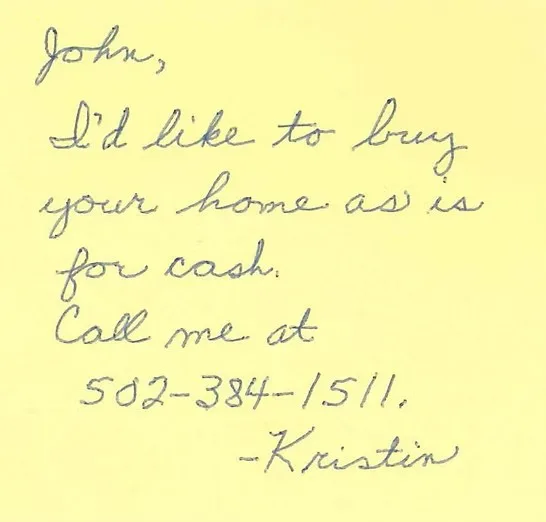
The future of marketing looks strangely like a letter written by your grandmother.
While everyone is shouting into the digital void, a machine picks up a pen.
Not a keyboard.
Not a chatbot.
Not a “personalized” email sequence with your first name bolted onto it.
A real pen.
Pen Point Technologies offers machines capable of producing handwritten mail at scale. Its page for home service businesses explicitly targets roofers, remodelers, window companies, pest control and home improvement companies (Pen Point Technologies).
That is fascinating.
We have spent twenty years automating customer relationships until they became cold, interchangeable, invisible.
Then we discover that one of the new competitive advantages is to imitate what we destroyed: the human gesture.
The machine does not write because it loves the customer.
It writes because the customer is tired of being treated like a row in a CRM.
Industrializing intimacy
The idea is almost disturbing: industrializing intimacy.
Pen Point Technologies presents its systems as industrial-grade signature and handwriting machines designed for high-volume personalized mail, combining hardware, human-authentic fonts and automation software (Pen Point Technologies).
A robot writes to look less robotic than our human marketing campaigns.
This is where we are.
The problem is not the machine.
The problem is the emotional impoverishment of our interactions.
When everything becomes automated, what feels personal becomes rare.
When everything becomes instant, what feels slow becomes precious.
When everything becomes digital, paper becomes a strategic anomaly.
The innovation is not in the ink.
It is in the contrast.
Personalization has become suspicious
Brands talk about personalization as if they had discovered tenderness.
In reality, many of them merely assemble fragments of data.
“Hello Philippe.”
“We selected this for you.”
“You will love this offer.”
“Only three seats left.”
“Your cart is waiting.”
The customer is not fooled.
They recognize the mechanism.
They feel the automation beneath the varnish of attention.
McKinsey reports that 71% of consumers expect personalized interactions and that 76% feel frustrated when they do not happen (McKinsey).
But this expectation creates a trap.
The more personalization becomes expected, the less it impresses.
The more it spreads, the more accurate it must be.
The more it relies on data, the more unsettling it can become.
Epsilon reports that 91% of respondents see at least one irrelevant ad every day, while 76% say they view brands negatively when those brands use inaccurate information in their advertising and messaging (Epsilon).
That is the paradox.
Customers want to be recognized.
They do not want to be tracked.
They want attention.
They do not want a demonstration of surveillance.
They want a relationship.
They do not want a clumsy simulation of one.
Paper as disruption
Automated handwritten mail works as a counter-move.
In a world saturated with screens, receiving a physical envelope almost becomes an event.
Mail forces a gesture.
You pick it up.
You turn it over.
You look at the handwriting.
You hesitate before throwing it away.
That micro-hesitation is valuable.
The USPS Household Mail Survey gathers information on mail use, household attitudes toward mail and behaviors related to advertising mail (USPS).
Canada Post published a neuromarketing study indicating that physical mail stimulated 70% higher brand recall than digital advertising in its study and was more effective at driving action (Canada Post).
The return of paper in some marketing systems does not mean digital is retreating. It means digital has made certain physical signals more visible.
Paper is no longer just a medium.
It becomes an interruption.
And in a world where everyone optimizes the click, the physical interruption can become a luxury again.
The old becomes new when the context changes
This is where the topic becomes far more interesting than a mere machine writing letters.
Innovation does not always consist of inventing the future.
Sometimes, it consists of reactivating an old signal with new technology.
In my book, I remind readers that innovation is not merely a brilliant invention. It requires the concrete implementation of a new or significantly improved product, service or process (my book, chapter 3).
Here, the object is not new: a handwritten letter.
The gesture is not new: picking up a pen.
The medium is not new: paper.
But the process changes.
The intimate gesture becomes programmable.
Personal mail becomes scalable.
Perceived attention becomes industrializable.
That is both process innovation and marketing innovation.
Not because it smells like ink.
Because it changes the relationship between a company and its customer at a precise moment in the journey.
Fake humanity can backfire
Of course, there is a risk.
Automated handwritten mail can create proximity.
It can also create disappointment.
If the customer discovers that the “personal” letter was never written by a human hand, the effect can turn against the brand.
Harvard Business Review has explored the risk of crossing the line between useful personalization and personalization perceived as intrusive, noting that overly targeted advertising can trigger consumer backlash (Harvard Business Review).
The same principle applies here.
Technology must not lie about intention.
A letter can be produced by a machine.
But the attention must remain real.
If the message is empty, handwriting will save nothing.
If the offer is mediocre, ink will change nothing.
If the company treats its customers poorly, the letter becomes a costume.
And costumes often end up being noticed.
Marketing confused speed with presence
Most organizations optimized speed.
Reply faster.
Follow up faster.
Qualify faster.
Automate faster.
Nurture faster.
Close faster.
Everything moves faster.
But the relationship has sometimes become flatter.
A customer receives automated reminders.
Follow-up emails.
Transactional SMS.
Notifications.
Retargeted ads.
Chatbots saying “I understand” without understanding much at all.
By optimizing the funnel, many companies forgot the face.
And when the face disappears, the gesture returns.
A handwritten letter, even an automated one, recreates a sense of pause.
It slows perception.
It signals: “Someone took the time.”
Even if, technically, a machine held the pen.
The warm robot paradox
The robot becomes warm because the human became procedural.
That is the deeper discomfort.
We have marketing teams made of humans producing campaigns that feel robotic.
And we have machines capable of producing objects that feel more human.
So the issue is no longer merely technological.
It is cultural.
An organization can use the best personalization tools and remain impersonal.
Another can use a handwriting machine and create a memorable moment.
The difference lies in intention, context and execution.
Technology does not make a brand human.
It amplifies what the brand already is.
If the brand is attentive, technology amplifies attention.
If the brand is opportunistic, technology amplifies opportunism.
If the brand is lazy, technology amplifies laziness.
Innovation as strategic reactivation
This case is valuable for leaders because it forces them out of a lazy vision of progress.
Progress is not always more screens.
Not always more AI.
Not always more data.
Not always more visible automation.
Progress can be a return.
A return to the tangible.
A return to slowness.
A return to rarity.
A return to gesture.
But with modern infrastructure behind it.
That is what makes this subject interesting: the future does not look like futuristic technology.
It looks like a letter.
The strategic signal to observe is not “handwritten mail is back.” The deeper signal is: “what feels human regains value when automation becomes omnipresent.”
What companies should examine
Every company should run a simple audit of its customer relationship.
Not a technical audit.
An emotional audit.
At which moments does the customer feel genuinely recognized?
At which moments do they feel treated like a ticket?
At which moments do they receive a message that could have been sent to anyone?
At which moments does the company talk about personalization while producing automated indifference?
At which moments would a physical, vocal, human or symbolic gesture create a positive rupture?
Handwritten mail is only one example.
In some industries, it will be a truly prepared phone call.
In others, a short video sent after a meeting.
In others, a voice message, a note inside a package, a local attention, a post-intervention follow-up, a recognition gesture.
The medium matters less than the contrast.
Competitive advantage does not come only from technology.
It comes from choosing the moment when technology must step back to let attention appear.
The boardroom question
Many leaders still ask:
“What can we automate?”
A more useful question would be:
“What have we automated so much that our customers no longer feel us?”
This changes everything.
The first formulation pushes toward cost reduction.
The second pushes toward relational value creation.
The first looks at the company.
The second looks at the customer.
The first optimizes the process.
The second restores the bond.
And sometimes, that bond fits inside an envelope.
Conclusion
A machine that writes by hand is not merely a marketing curiosity.
It is a symptom.
The symptom of a world saturated with fast, cold, optimized, tracked, scored, automated messages.
The symptom of a customer relationship that has sometimes gained efficiency while losing presence.
The symptom of a market where humanity becomes so rare that we invent machines to reproduce its signs.
There is something dizzying in this idea.
A company can now automate the appearance of the human gesture.
But it cannot automate the sincerity of its intention.
👉 Which part of your customer relationship has become so automated that a simple human gesture would feel like a revolution?

References
(Pen Point Technologies) = https://homeservice.penpointtech.com/
(Pen Point Technologies) = https://www.penpointtech.com/
(McKinsey) = https://www.mckinsey.com/capabilities/growth-marketing-and-sales/our-insights/the-value-of-getting-personalization-right-or-wrong-is-multiplying
(Epsilon) = https://www.epsilon.com/us/insights/resources/personalization-research
(USPS) = https://about.usps.com/what/performance/household-mail-survey/
(Canada Post) = https://www.canadapost-postescanada.ca/cpc/en/our-company/news-and-media/corporate-news/news-release/2015-08-27-direct-mail-beats-digital-advertising-in-driving-consumers-to-act-neuromarketing-study
(Harvard Business Review) = https://hbr.org/2018/01/ads-that-dont-overstep