The day I confused visibility with impact
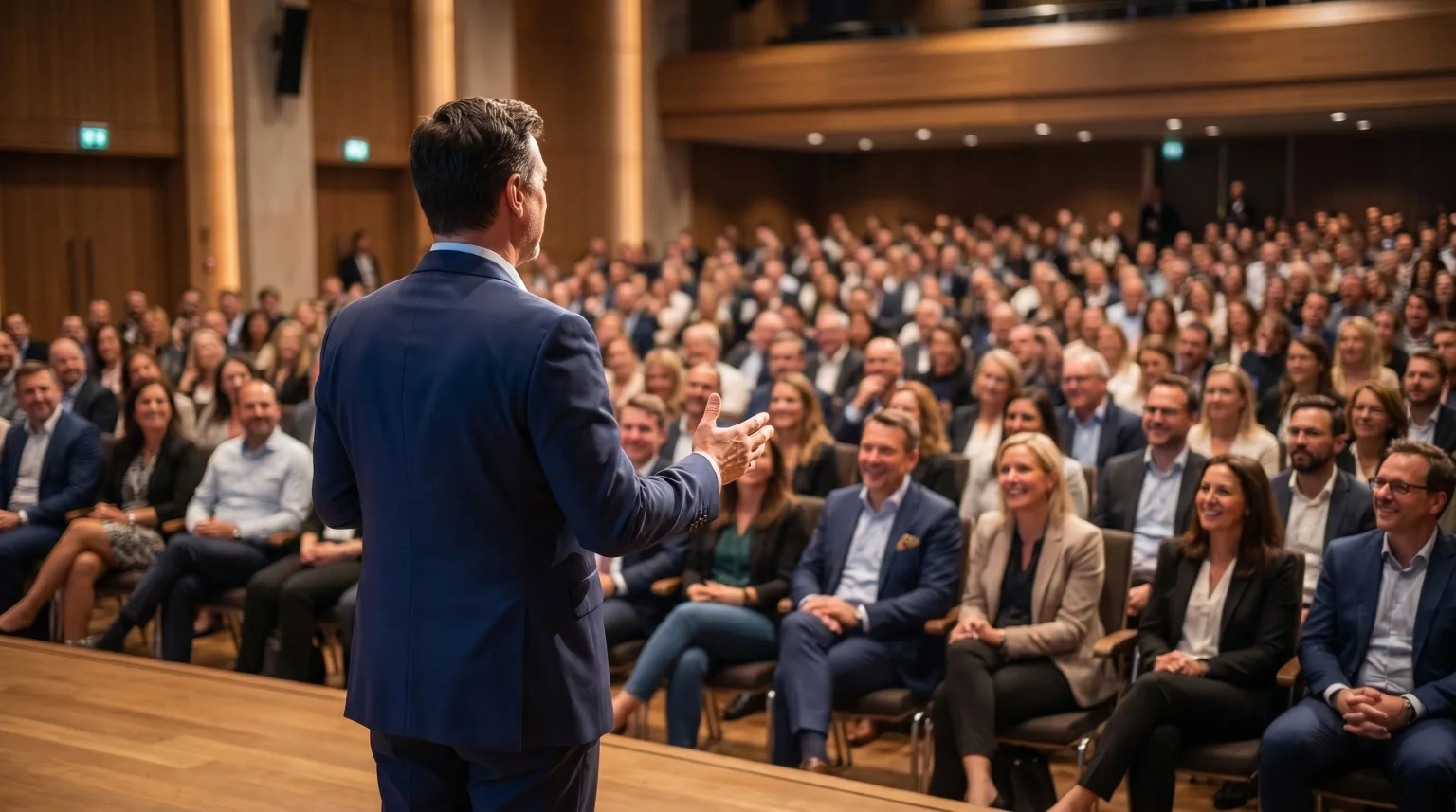
Professional speaker secret: one of the most unsettling compliments after a keynote can sometimes be zero photos.
When I started speaking in front of real audiences, I made a magnificent mistake.
I thought I could measure impact through photos.
In my mind, the logic was simple: if people pulled out their smartphones, took pictures, filmed a few moments, shared them on LinkedIn, then the keynote had produced something.
Communication logic.
Social media logic.
Dangerously stupid logic.
At the beginning of my talks, I used to say proudly:
“Put your phones on vibrate, and feel free to take photos and share them.”
Then nothing.
No photo.
No post.
No tag.
Absolute emptiness.
In my mind, the verdict was obvious: the audience does not like it.
Small inner collapse. Big self-questioning. Very bad moment for the ego.
So I asked.
The answers stopped me cold.
“Your talk was so engaging that I did not even think about using my smartphone.”
Or:
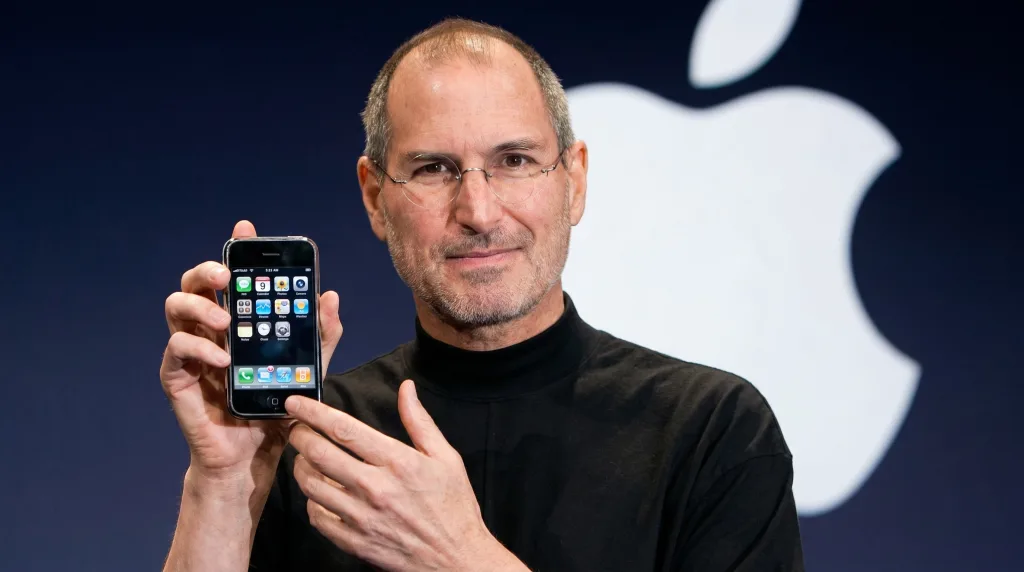
“Usually, I take out my smartphone when I get bored. I go on TikTok or LinkedIn. This time, you captured my attention from the start. I forgot I had an iPhone.”
That day, I understood that I was measuring the wrong signal.
A raised smartphone was not necessarily proof of engagement.
An absent smartphone could be proof of total attention.
The trap of the flattering KPI
The problem with indicators is that they love flattering our ego.
A photo shared on LinkedIn is visible.
A tag is visible.
A story is visible.
An absent screen creates no notification.
It gives no social dopamine.
It feeds no algorithm.
It creates no immediate public proof.
And yet, in a room, it can say something extremely valuable: the participants are there.
Truly there.
Not in their inbox.
Not on WhatsApp.
Not inside a Teams notification.
Not silently comparing your talk with another professional emergency.
In a world where attention has become one of the most contested resources, holding a room without visible screens becomes a rare signal.
Research supports this point: the mere presence of a smartphone can occupy part of the available cognitive resources, even when the phone is not actively used (Journal of the Association for Consumer Research).
In other words, a smartphone placed in front of you can already be a half-open door to somewhere else.
And on stage, “somewhere else” is a powerful competitor.
The VSI: Visible Smartphone Index
Since that realization, I have changed my indicator.
I now measure what I call the VSI: Visible Smartphone Index.
The lower it is, the better I breathe.
Of course, this is not an academic standard. It is a field indicator. A weak signal. A speaker’s observation.
But it helps me.
When I see a room with very few visible phones, I know something is happening.
When I see people following with their eyes.
When I see bodies leaning forward.
When I see smiles arriving before the punchline.
When I see silence becoming dense.
When I see participants forget they have a pocket computer in their hand, I know attention is there.
And attention is far more valuable than a photo.
A photo captures an instant.
Attention transforms a moment.
The smartphone is often a symptom of boredom
For a long time, I thought the smartphone was the enemy.
I now see it more as a thermometer.
In a keynote, a meeting, a seminar, or a training session, a screen lighting up can mean many things.
An urgent message.
A reflex habit.
Cognitive fatigue.
Professional anxiety.
Or, more simply, boredom.
That is where the signal becomes interesting.
When someone takes out their smartphone, they are not necessarily saying: “Your content is bad.”
They may be saying: “My mind just escaped.”
They may be saying: “The rhythm has dropped.”
They may be saying: “I no longer feel concerned.”
They may be saying: “I no longer understand why I should remain mentally here.”
Attention cannot be demanded. It must be earned.
You do not hold an audience through instruction.
You hold it through narrative tension, clarity, surprise, interaction, emotion, rhythm, and usefulness.
The room is not a backdrop, it is a living organism
A keynote is not a monologue placed on a stage.
It is a living system.
The room breathes.
It contracts.
It drifts.
It comes back.
It laughs.
It tightens.
It doubts.
It understands.
It protects itself.
It opens up.
The speaker’s role is to capture these micro-signals in real time.
An audience does not always give feedback through a form.
It gives it through shoulders.
Through eyes.
Through silence.
Through willingness to participate.
Through the number of visible screens.
Through the exact moment phones reappear.
A smartphone taken out at minute 7 does not tell the same story as a smartphone taken out at minute 48.
A smartphone taken out after an emotional sequence does not tell the same story as a smartphone taken out during a complex explanation.
Everything is context.
Everything is observation.
Everything is adjustment.
This is exactly the kind of experimentation I learned to build into my talks: observe, measure, adjust, start again. I discuss this in my book, chapter 15.
Attention leaks through micro-escapes
We like to believe we are multitasking.
In reality, we mostly switch from one task to another, with a cognitive cost.
The American Psychological Association notes that task switching creates mental costs, often invisible, that can strongly reduce productive efficiency (American Psychological Association).
Notifications amplify this phenomenon. A study published in Scientific Reports notes that notifications and vibrations can distract people even when they do not respond to the messages (Scientific Reports).
And the problem goes beyond productivity.
It affects presence.
Research published in the Journal of Social and Personal Relationships found that the presence of a phone can reduce perceived conversation quality, especially when the topic is personally meaningful (Journal of Social and Personal Relationships).
That is fascinating.
We created tools to stay connected at a distance.
Then we had to learn how to contain them in order to stay connected in person.
The great misunderstanding of professional events
Many event organizers want photos.
I understand them.
They need to communicate.
They need to prove that the event happened.
They need to feed the company’s social media channels.
They need to show a full room, a speaker on stage, an engaged audience.
But asking the audience to produce that proof can create confusion.
The participant did not come to become a volunteer community manager.
They came to live a useful moment.
If they take photos, great.
If they do not take photos because they are absorbed, even better.
Since then, when I want photos or videos to share, I no longer rely on the audience.
I ask the organizer whether there is a photographer.
Or I bring in professionals.
The audience must remain the audience.
Its role is not to document the experience.
Its role is to live it.
The best engagement is not always visible
Social media has taught us to confuse engagement with public manifestation.
A like becomes a signal.
A comment becomes a signal.
A share becomes a signal.
A photo becomes a signal.
But in a room, the most important signals do not always flow back into the algorithm.
Someone who does not touch their phone for 60 minutes.
A leader who changes her mind.
A manager who understands why his team stays silent.
An employee who dares to ask a question.
An executive committee that decides to experiment.
A room that leaves with one sentence that stays.
That is real impact.
It does not always appear the same day.
It is not always measured in analytics.
It does not always generate a photo.
But it can transform a decision, a posture, a behavior, a culture.
The reassuring KPI can hide reality
In companies, this trap is everywhere.
We measure what is easy.
The number of participants.
The attendance rate.
The number of slides.
The number of views.
The number of posts.
The number of reactions.
The number of completed forms.
All of that can be useful.
But useful does not mean sufficient.
An indicator can be perfectly measurable and completely secondary.
A room can be heavily photographed and mentally absent.
A meeting can have many participants and very few decisions.
A seminar can generate LinkedIn posts and change nothing on Monday morning.
A training session can receive excellent ratings because it was pleasant, while having no effect on practices.
The right KPI is not the one that reassures.
It is the one that reveals reality.
Attention has become proof of respect
Today, earning the full attention of an audience is difficult.
Pew Research Center reported in a 2025 survey that about four-in-ten American adults describe their internet use as almost constant (Pew Research Center).
Gloria Mark, a researcher on attention, explains in an American Psychological Association interview that the average attention span on screen has declined significantly over the years (American Psychological Association).
In that context, an attentive room becomes a luxury.
Not a decorative luxury.
A cognitive luxury.
A relational luxury.
A managerial luxury.
A strategic luxury.
Because an organization that can no longer create moments of deep attention can no longer truly learn collectively.
It stacks meetings.
It stacks messages.
It stacks notifications.
It stacks emergencies.
Then it wonders why important decisions become blurry.
What the VSI changes in my practice
The VSI taught me humility.
At first, I wanted visible proof of my impact.
Now, I first look for living proof of attention.
That changes everything.
I work more on transitions.
I vary the rhythm.
I create breaks.
I design experiments.
I watch for the moments when the room drifts.
I simplify what needs to be simplified.
I cut what flatters my ego but does not help the audience.
I let silence breathe.
I prepare interactions.
I ask professionals, not participants, for photos.
On stage, the fewer smartphones I see, the more I tell myself that the audience has given me something rare: its presence.
And that presence deserves respect.
The wrong indicator is expensive
In your meetings, keynotes, or events, what is the wrong indicator you may still be following?
The number of people connected?
The number of slides produced?
The number of messages sent?
The time spent in meetings?
The immediate satisfaction score?
The number of posts published after the event?
All these indicators can have value.
But they can also hide the essential.
Did people understand?
Did they remember?
Did they change perspective?
Do they want to act?
Do they know what to do on Monday morning?
Did they live a moment strong enough to remember without a photo?
In a world saturated with visible proof, the absence of smartphones can become a beautiful signal.
Zero photos.
Zero posts.
Zero tags.
And maybe, finally, real attention.
Of course, I address this topic in my keynotes, workshops, and advisory work. With one simple indicator: the fewer smartphones I see, the better I breathe.

References
- (Journal of the Association for Consumer Research) = https://www.journals.uchicago.edu/doi/full/10.1086/691462
- (Journal of Social and Personal Relationships) = https://journals.sagepub.com/doi/10.1177/0265407512453827
- (Scientific Reports) = https://www.nature.com/articles/s41598-023-36256-4
- (American Psychological Association) = https://www.apa.org/topics/research/multitasking
- (American Psychological Association) = https://www.apa.org/news/podcasts/speaking-of-psychology/attention-spans
- (Pew Research Center) = https://www.pewresearch.org/short-reads/2026/01/08/internet-use-smartphone-ownership-digital-divides-in-u-s/
- (PNAS) = https://www.pnas.org/doi/10.1073/pnas.0903620106