Cognitive Bias: Why You Never See Reality
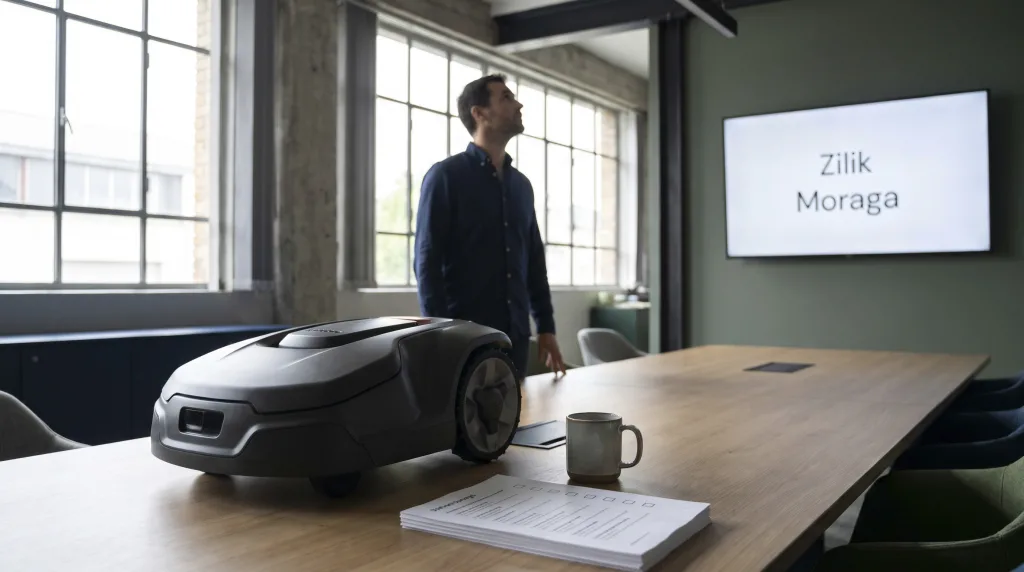
Joel has kept a line pinned above his desk for three years: “We don’t see things as they are, we see them as we are.” Anaïs Nin wrote it in the 1940s. Joel runs a product team at a logistics company, and he pinned it up right after burying a project that should have succeeded.
The project rested on solid data. Customers surveyed wanted the service. Early tests were positive. Joel and his steering committee killed it anyway, because one isolated, badly interpreted number confirmed what the whole room already feared in private: that the market wasn’t ready. Six months later a competitor launched the same service. It took off.
What happened in that meeting room is not unusual. It is a cognitive bias, and it drives a large share of business decisions without ever announcing itself.
What your brain does behind your back
A cognitive bias is a mental shortcut. To process information fast, the brain simplifies, generalizes, and compares to what it already knows. That shortcut once let our ancestors survive a predator without convening a review committee. It becomes a problem the moment a decision is genuinely complex and speed wins over accuracy.
It is one of the invariants I have watched most closely across thirty years at Apple, Sony, and later running R&D at Neopost: technology changes, processes change, but the human brain making the call stays wired the same way. I gave an entire chapter of (My book, chapter 6) to this question, because no innovation method holds up if it ignores that variable.

Status quo bias, invisible and near-universal
The first bias that kills innovation projects is status quo bias: a preference for what already exists, simply because it already exists. Faced with a complex decision, the brain saves energy by voting for the most familiar option. In my keynotes, a short live experiment shows that between 85% and 90% of an audience falls into this bias without noticing, until it’s pointed out.
Research on strategic decision-making confirms this at scale. A survey of more than 2,000 executives found that only a quarter rated the quality of their companies’ strategic decisions as genuinely good, with most respondents saying bad decisions were nearly as common as good ones (McKinsey)
Confirmation bias, or how a good idea dies without anyone noticing
Confirmation bias is the second major culprit. It means searching for, interpreting, and remembering information in a way that confirms what you already believe, while discounting what contradicts it. That is exactly what happened in Joel’s meeting: one isolated number was enough, because it matched the room’s shared fear.
The bias has been documented since foundational cognitive psychology research in the 1960s, and it remains one of the most studied biases in the scientific literature today, showing up in political decisions and even in scientific research itself (Wikipedia). A recent review of professional decisions across four fields (management, finance, medicine, law) places overconfidence and confirmation among the most recurrent biases, including among the most experienced experts (Frontiers in Psychology).
Nobel laureate Daniel Kahneman documented this with his coauthors in an article that became a reference point for executives: awareness of a bias is not enough to neutralize it. Only a structured decision process with explicit safeguards actually reduces its effect (HBR)
Anchoring, or the €997 price tag
A third bias deserves naming, because it shapes both your internal decisions and the way solutions get sold to you: anchoring. It means leaning too heavily on the first piece of information encountered, to the point that it shapes every judgment that follows.
Quote a price of €997, then offer an “exceptional” deal at €197, and the second number will look unbeatable, purely because it’s judged against the anchor set right before it. I have watched the same mechanism play out in investment committees: the first budget figure mentioned in a meeting becomes the reference point everything else gets compared to, whether or not it was accurate. It’s a mechanism I detail in (My book), with concrete examples drawn from real investment committees.
A guide aimed at finance leaders notes that organizations that take the issue seriously build formal decision-review processes rather than relying on individual managers’ vigilance alone (McKinsey)
Debiasing is not an act of willpower, it’s a method
Here is the most common mistake: believing that knowing your biases is enough to escape them. Intellectual awareness is not sufficient. What actually works is structural: delaying a fast decision instead of settling it in the heat of the moment, revisiting an evaluation after a set time period, systematically bringing in an outside opinion from someone with no stake in the topic, and above all, favoring measured facts over gut feeling.
That is precisely the principle I formalized in the Innovational Intelligence™ System: assumptions are dangerous until they meet reality. A retail company I worked with was convinced its target audience avoided mobile. Testing proved the opposite in three weeks. The bias had never been named until someone decided to test it.
The essentials
Remember three things from this piece:
- A cognitive bias is not a personal weakness, it’s a normal brain response to complexity.
- Status quo bias, confirmation bias, and anchoring are the three mechanisms that weigh most heavily on business decisions.
- You don’t beat a bias with willpower, you beat it with a method: a decision delay, an outside opinion, and systematic testing of assumptions.
Joel’s quote is still pinned above his desk. He didn’t keep it to feel better. He kept it to remind himself, every morning, that he never quite sees the market as it actually is.

References
- (My book) https://philippeboulanger.com/book/
- (McKinsey) https://www.mckinsey.com/capabilities/strategy-and-corporate-finance/our-insights/the-case-for-behavioral-strategy
- (McKinsey) https://www.mckinsey.com/capabilities/strategy-and-corporate-finance/our-insights/biases-in-decision-making-a-guide-for-cfos
- (HBR) https://hbr.org/2011/06/before-you-make-that-big-decision
- (Wikipedia) https://en.wikipedia.org/wiki/Confirmation_bias
- (Frontiers in Psychology) https://www.ncbi.nlm.nih.gov/pmc/articles/PMC8763848/