
Clara runs a forty-person communications agency. One January morning she calls me, her voice tight. « Since ChatGPT, my studio is on edge. Two designers tell me they are finished, a third proudly shows me images generated in thirty seconds, and I have to decide without knowing what I am deciding on. Help me put some order back into this. »
I laid a single sheet of paper on the table between our two coffees. One sheet, twenty-one lines. « Here is your battle plan, Clara. It is three hundred and eighty years old, and it answers your question better than every webinar you sat through this quarter. »
Everyone asks what AI will do to work. That is the lazy question. The good one fits in a sentence: when the machine can do the doing, what is left that is actually yours?
Twenty-one lines on one sheet of paper
In 1645, in the last weeks of his life, Miyamoto Musashi wrote twenty-one short precepts. More than sixty duels behind him, never once beaten, by his own account. He had lived through the collapse of an era: the end of Japan’s civil wars, a samurai class losing its function, a whole profession watching its core skill lose its market value in a single generation. The parallel with today draws itself.
He called the text the Dokkodo, « the way to walk alone ». The Dokkodo is no fencing manual: Musashi had already written that one, The Book of Five Rings. This is something else, a personal operating system, the rules he had run himself on for decades, compressed to their bare minimum. He handed it to a single disciple, Terao Magonojo, then died a week later (Wikipédia).
Three hundred and eighty years later, the text reads like the most honest guide to the AI age I have found. Not because Musashi predicted machines. Because he understood the thing the future-of-work debate keeps missing: tools change, the operator’s rules do not. AI is changing what work is. It is not changing what makes a person worth hiring, following, or listening to. That invariant has not moved in centuries, and it is human before it is technological.
So let us look at which lines of the Dokkodo speak directly to AI and the acceleration of change. Not all of them do. About ten do, and unsettlingly well.
Accept the real before trying to calm it (precepts 1 and 17)
Precept 1: « Accept everything just the way it is. » Precept 17: « Do not fear death. »
Panic is directly linked to the survival instinct. When management has not said clearly how AI will be used and for what, that vacuum feeds the deepest fear, the fear of becoming obsolete. Stanford’s AI Index puts a number on that nervousness: it rose from 38 % in 2022 to 52 % in 2023, and the wave of generative AI has only amplified it since (Stanford HAI). Musashi’s « do not fear death » was written for the duel. Moved into the office, it targets the fear of being replaced, that small professional death that freezes a whole team.
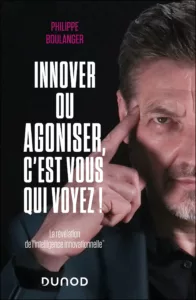
Accepting the real as it is means refusing two escape routes: the denial of the person who pretends nothing is changing, and the panic of the one already packing boxes. The duelist who fears death has already lost the fight. The employee convinced he is finished stops exploring, so he becomes finished. I give every team two questions, and only two: how can I use AI to raise my productivity and the quality of what I deliver in my current role? And what can I do now, thanks to AI, that was impossible before? Any use of AI that answers neither is a distraction. That is exactly the framework I detail in my book, in the chapter on the application of artificial intelligence (My book, chapter 14).
Distrust the partial feeling (precept 3)
Precept 3: « Do not, under any circumstances, depend on a partial feeling. »
This is the line I wish I had written. A partial feeling, in 1645, is the fleeting impression during a duel, the unchecked hunch that makes you commit the blade at the wrong moment. In 2026, it is the sales promise you swallow without measuring it. Everyone quotes the fine BCG-Harvard study: 758 consultants, 25.1 % faster, higher quality on eighteen tasks. The trap sits right there. That model does not transfer to every business function, because not everyone is a full-time consultant assigned to consulting tasks. Another study of about 25,000 workers brings the average time saved back to between 2.8 % and 3 %. That is far from 25.1 %, and the gap between the promise and the reality is exactly the ground where disillusionment grows.
Assumptions are dangerous and must be killed by experimentation as early as possible. So you measure: before, during, after. And for every activity you ask two control questions, are the expected gains realistic, and are they verifiable? McKinsey observes the same gap at the level of organizations: individual adoption is soaring while the value measured at company level stays far more modest (McKinsey). Musashi would tell you never to commit the blade on a sensation. I tell you never to deploy an AI on an assumption you have not killed.
The weapon collector (precepts 16 and 14)
Precept 16: « Do not collect weapons or practice with weapons beyond what is useful. » Precept 14: « Do not hold on to possessions you no longer need. »
Here is the exact portrait of the fake AI expert. He appeared with ChatGPT, he collects tools the way others hang swords on the wall, and he has never won a single duel with any of them. Knowing how to generate a dreamlike image in an image model is not a strategy. Musashi, who devoted his life to weapons, warns against accumulation: one more blade does not make a better fighter. One more subscription to a generative tool does not make a better organization. The two-question filter cuts through the pile: if a tool does not make your work more productive or unlock something that was impossible yesterday, it joins the rack of decorative weapons.
Precept 14 is harder still, and this time it targets our own skills. I have watched skill sets go from career-defining to worthless in a few years. Mainframe operators. Server administrators. Switchboard operators. Every wave produced the same two groups: those who had built their identity on a tool, and those who had built it on judgment. The first group panicked. The second adapted and moved up a level. The World Economic Forum sizes the current wave: 92 million jobs displaced by 2030, 170 million created, a net gain of 78 million, on condition that you let go in time of possessions gone useless, including some of your habits (World Economic Forum). Clinging to a dead skill is fighting with a rusted weapon out of loyalty to the metal.
Do not act on established beliefs (precepts 15 and 11)
Precept 15: « Do not act following customary beliefs. » Precept 11: « In all things have no preferences. »
An AI that changes how you carry out an activity is a process innovation. And a process innovation always hits the same wall: « we have always done it this way ». The status quo bias is the customary belief par excellence, the one that makes you defend a process because it is old, not because it is good. Musashi, who invented his own two-sword school against the usage of his time, refuses custom as a compass. The World Economic Forum estimates that 39 % of a job’s core skills will be outdated by 2030 (World Economic Forum). Still acting on the beliefs of 2019 means training for a duel that will not take place.
Precept 11 targets a more intimate trap: our preferences. Our past success is our greatest enemy. It blinds us, drops our guard, and replaces humility with overconfidence. The leader who prefers his pet project, the team that prefers its usual tool, the manager who prefers the version of the facts that suits him, all judge by preference instead of judging by evidence. « Have no preferences » does not mean decide nothing. It means decide on the data, not on the attachment. That is the discipline I lay out in my book, in the chapter on the lived experience of the individual and its biases (My book, chapter 6).
Think lightly of yourself and deeply of the world (precepts 4 and 20)
Precept 4: « Think lightly of yourself and deeply of the world. » Precept 20: « You may abandon your own body but you must preserve your honour. »
Precept 4 is a definition of intellectual humility in eight words. A leader does not first ask « which tool ». He asks whether the management team has the humility to admit it may not yet have the skills to adapt its vision. That admission is the start of wisdom. Thinking lightly of yourself means accepting that you do not know. Thinking deeply of the world means studying the incoming wave seriously instead of commenting on it. The toy collector does the reverse: he thinks himself important and thinks the world shallow.
Precept 20, honour, is the one about trust. The rule for employees fits in a sentence: I say what I do, and I do what I say. Break that alignment, and every intention you announce is met with suspicion. La Poste defined its AI strategy in July 2023 and only presented its postal workers with the finished decision at rollout, in January 2024. That silence triggered an immediate strike. Microsoft observes the same fault at scale: AI spreads fast, but its benefits stay uneven as long as governance and communication do not keep up (Microsoft Research). You can lose a technical battle and recover. Lose your teams’ trust, and you have lost the adoption war.
Never stray from the way (precept 21)
Precept 21: « Never stray from the way. »
This is the last line, and it is the invariant. Musashi changed weapons, tactics and schools all his life. The way itself never moved. Our way has a name, the Innovational Intelligence™ System, and it rests on a conviction my life as a technologist took a long time to accept: the invariant of innovation was never the technology, it is the human being, their fears, their biases, their emotions, from the newest employee to the CEO. As the neuroscientist António Damásio puts it, we are not thinking machines that feel, we are feeling machines that think.
The way, concretely, holds in five steps: vision, communication and sentiment measurement, a strike team of explorers, deployment and measurement, then sentiment measurement again. It is a learning loop, not a straight line. The tools that fill it will change ten more times before the decade ends. The loop will hold. That is the whole point of my book (My book): adopting AI does not escape the rules of innovation, and those rules are as old as the first craftsman who had to learn a new tool without disowning his trade.
The essentials
Remember three things:
- Tools change, the operator’s rules do not. The Dokkodo is a human operating system, and the human remains the invariant of innovation in the face of AI.
- About ten of the twenty-one precepts target the AI age directly: accept the real (1) and do not fear obsolescence (17), distrust the unmeasured feeling (3), do not collect tools (16) or cling to dead skills (14), leave established beliefs (15) and preferences (11) behind, keep humility (4) and the honour of trust (20).
- Never stray from the way (21): measure before, during, after, kill assumptions with experimentation, and judge on evidence, not on attachment.
You do not have to predict the future of work, because you are going to create it. Musashi wrote his sheet alone, a week before dying, with no idea an innovation consultant would one day quote it to talk about machines. Write yours while you still hold your blade.

References
- (My book) https://philippeboulanger.com/book/
- (Wikipédia) https://en.wikipedia.org/wiki/Dokkōdō
- (World Economic Forum) https://www.weforum.org/publications/the-future-of-jobs-report-2025/
- (McKinsey) https://www.mckinsey.com/capabilities/tech-and-ai/our-insights/superagency-in-the-workplace-empowering-people-to-unlock-ais-full-potential-at-work
- (Stanford HAI) https://hai.stanford.edu/ai-index
- (Microsoft Research) https://www.microsoft.com/en-us/research/blog/new-future-of-work-ai-is-driving-rapid-change-uneven-benefits/