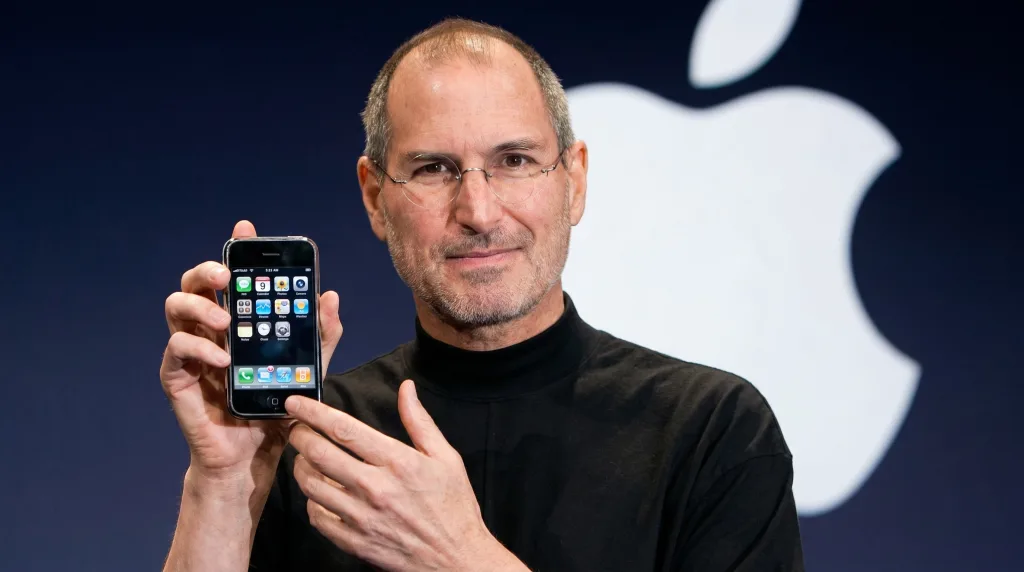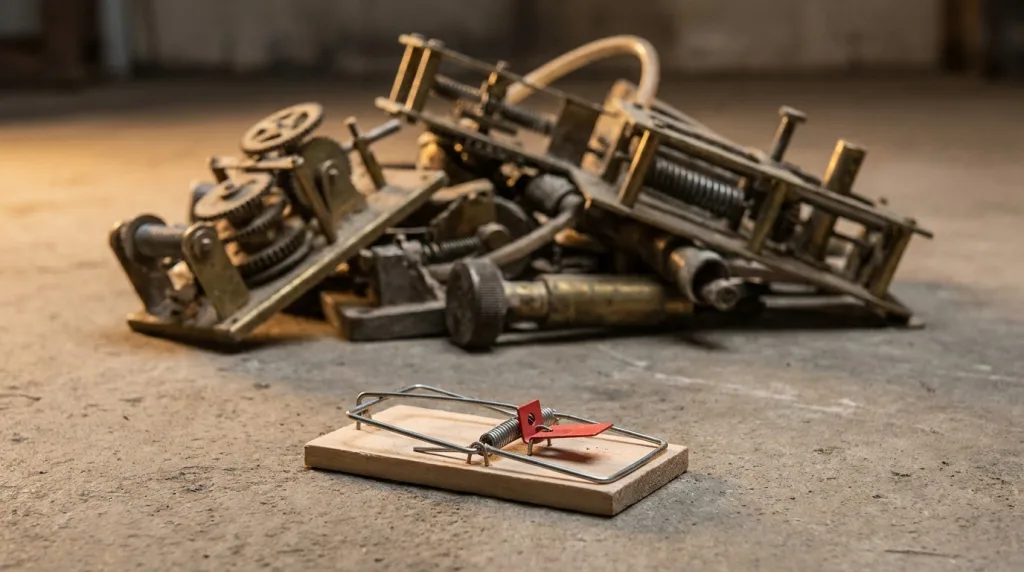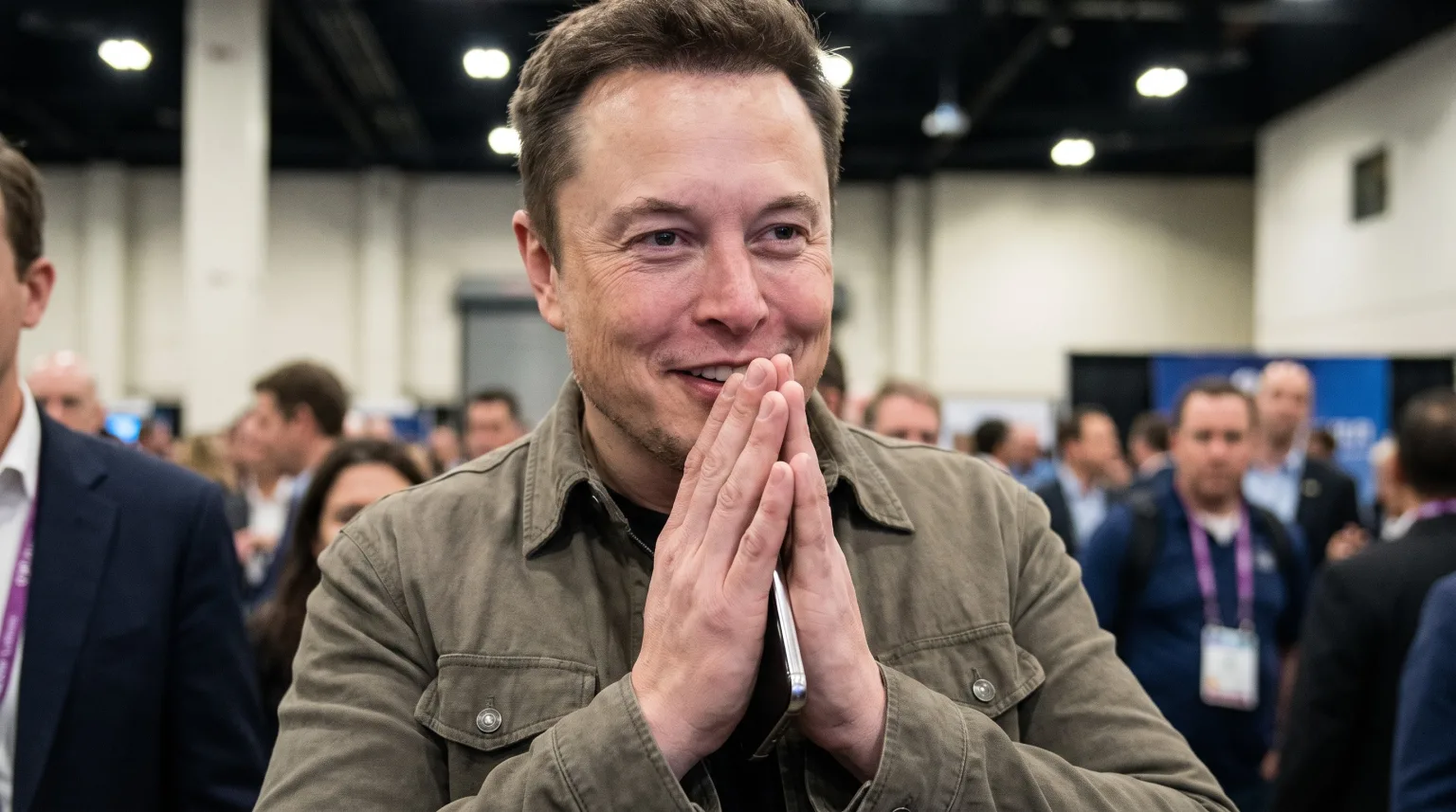
The rumor is delicious: SpaceX may be preparing an AI smartphone thinner than the iPhone. Elon Musk denies it. And yet, the real shockwave is somewhere else.
For years, people have announced the death of the smartphone. It resists. It swallows everything. Our photos, messages, banks, meetings, memories, train tickets, payment methods, conversations, boarding passes and elevator boredom.
Then comes this rumor: SpaceX reportedly showed some investors a prototype AI device, a kind of next-generation smartphone, connected to the Musk universe, xAI, Starlink and an infrastructure that no longer looks like that of a traditional phone manufacturer.
According to information reported by the Wall Street Journal and picked up by several media outlets, the device would be thinner than an iPhone, use a proprietary operating system, integrate technologies from xAI and rely on a Qualcomm Snapdragon chip. Elon Musk answered on X: “Utterly false.” Fine. Let’s treat the topic for what it is today: a denied rumor. But even a denied rumor can reveal a major strategic shift. (Reuters, The Decoder)
The product gets attention, the system wins the war
The trap is to look at the object.
Thinner than an iPhone? Strong hook.
An AI device? Strong promise.
A SpaceX phone? Strong fantasy material.
But the decisive innovation is not necessarily in the thinness of the object. It is in the invisible architecture that could surround it.
A classic smartphone relies on a familiar stack: hardware, operating system, apps, cloud, telecom operators, app stores, services, data, advertising, payments and subscriptions. Apple and Google built empires on that architecture. They do not only sell phones or operating systems. They control gateways.
That is why the SpaceX rumor is fascinating. It is not only about a device. It suggests the possibility of a system where the device would be the visible part of a much broader platform: satellites, connectivity, generative AI, data, social network, potential payments, digital identity, professional services, autonomous assistants and proprietary software.
In this scenario, the iPhone competitor would not be a phone.
It would be an ecosystem.
The smartphone was the interface of our fingers
The smartphone won because it turned our fingers into the remote control of the world.
We tap, swipe, pinch, approve, send, pay, book, share. We move from one app to another like walking through rooms in an invisible house. The smartphone was the perfect interface for the app economy.
But generative AI changes the nature of the gesture.
An intelligent assistant does not necessarily need a giant screen. It needs context, voice, memory, connectivity, anticipation and fluid access to our intentions. It must understand what we want to do before we feel like opening five different apps to do it.
In the smartphone world, the user executes.
In the AI assistant world, the user delegates.
That difference is massive.
When I want to organize a professional trip today, I still go through fragmented actions: calendar, email, train, plane, hotel, taxi, map, messaging, notes, invoice, CRM. Tomorrow, the winning interface may be the one that understands the full intention: “Organize this trip for me in a way that fits my usual constraints.”
The next object may not be the interface of our fingers.
It may be the interface of our decisions.
SpaceX is not a phone manufacturer
This is where the rumor becomes interesting.
SpaceX is not Samsung. SpaceX is not Apple. SpaceX is not a smartphone manufacturer trying to gain two market share points with a better camera sensor or a slightly better battery.
SpaceX is an infrastructure company.
It launches rockets. It deploys satellites. It operates Starlink. It works on direct-to-cell communications with partners such as T-Mobile. It belongs to a logic where connectivity no longer depends only on traditional ground towers. (T-Mobile)
Add xAI, Grok, X, Tesla, usage data, a direct relationship with massive communities and the ambition of an “everything app,” and you get a strategic cocktail far more powerful than a simple object in a pocket. xAI presents Grok as a set of models able to reason, code and process voice, images and video. (xAI)
The SpaceX smartphone rumor is therefore a signal.
It says something deeper: the technology battle is no longer only between devices. It is between architectures of dependency.
Dependency is the real business model
The product triggers the purchase.
The ecosystem creates the habit.
The habit creates dependency.
The dependency creates the rent.
Apple understood this beautifully with the iPhone, App Store, iCloud, Apple Pay, AirPods, Apple Watch and services. The iPhone is no longer only a phone. It is a personal, professional, banking, social and emotional passport.
That is why it is so hard to replace.
To replace the smartphone, it is not enough to offer a better device. You must offer a better dependency. More fluid. More useful. More invisible. More integrated into daily life.
And this is where AI changes everything.
A truly integrated AI assistant could become the new center of gravity. It could book, negotiate, filter, summarize, write, call, compare, recommend, alert, remember, coordinate and decide under human supervision. The screen would become secondary. Conversation would become the command. Context would become the fuel.
The risk for the iPhone is not that a device becomes thinner.
The risk is that the iPhone becomes less central.
OpenAI, Jony Ive and the race for the new object
SpaceX is not alone in this battle of interfaces.
In 2025, OpenAI officially announced the integration of io Products, the team of Jony Ive, Apple’s former iconic designer, while indicating that LoveFrom remained independent and would take on deep design and creative responsibilities across OpenAI. (OpenAI)
This point matters.
Why are major AI players so interested in objects?
Because AI locked inside an app remains dependent on someone else’s interface.
If your AI assistant lives inside the iPhone, it depends on iOS.
If it lives inside Android, it depends on Google.
If it lives inside an application, it depends on distribution rules, notifications, permissions, privacy constraints, the payment system, access to sensors and the final arbitration of the platform.
The new AI object is therefore less a gadget than an attempt at strategic independence.
Creating your own device means trying to control the entry point.
And controlling the entry point, in technology, means controlling part of the power.
The classic mistake: confusing invention and innovation
This is exactly what I address in my book, chapter 3.
An innovation is not a brilliant idea walking around alone wearing sunglasses. An invention can remain in a lab, in a patent, in a presentation or in a rumor. Innovation requires implementation, a team, an organization, a strategy, trade-offs, real usage, a business model and the ability to challenge the status quo.
In my book, chapter 3, I precisely distinguish creativity, invention and innovation. Creativity imagines. Invention creates something new. Innovation implements, transforms a use case, shifts a practice, modifies an organization or creates observable new value.
That is why the SpaceX rumor is a textbook case.
The issue is not: “Do they really have a prototype?”
The issue is: “What architecture would make this prototype powerful if it existed?”
A prototype can be interesting.
A system can become dangerous for competitors.
The AI object will have to beat our habits
Replacing the smartphone is a massive ambition.
The difficulty is not only technological. It is behavioral.
We have learned to live with this glowing rectangle. We know where to tap. We know how to search. We know how to take a picture, send a message, find a document, check a payment, scroll through a social feed.
The smartphone has become a cognitive extension.
It has also become a nervous extension.
For a new object to win, it will need to offer a much smoother experience than the smartphone on frequent tasks. It will have to reduce effort. It will have to reduce friction. It will have to give an immediate feeling of power. It will have to be socially acceptable. It will have to respect, or at least promise to respect, an acceptable balance between usefulness and surveillance.
Because a contextual AI object raises a huge problem: the more useful it is, the more it needs to know.
The more it knows, the more intrusive it becomes.
The more intrusive it becomes, the more trust becomes strategic.
Trust will be the new design
The design of the next AI object will not only be aesthetic.
Design will also be ethical, social, organizational and psychological.
Where does my data go?
Who is listening?
Who remembers?
Who decides?
Who can audit?
Who can delete?
Who can correct?
Who can disconnect?
The old design challenge was to make an object beautiful, desirable and simple.
The new design challenge will be to make a system understandable, acceptable and controllable.
This is where many companies will get it wrong. They will believe the battle is about the form of the object: badge, glasses, pendant, watch, earpiece, ultra-thin smartphone.
The battle will be about trust in the architecture.
Business leaders must look behind the prototype
For leaders, managers and innovation teams, this rumor is worth more than a fan debate between Apple, SpaceX, OpenAI or Google.
It reminds us of an essential rule: never look only at the product.
Look at the system.
Who owns the customer relationship?
Who owns the data?
Who owns the interface?
Who owns the distribution?
Who owns the infrastructure?
Who owns the learning capacity?
Who owns the trust?
In many companies, visible innovation is an object, an application, a service, a chatbot, a prototype. Decisive innovation is often invisible: organization, architecture, data, governance, security, adoption, business model, partnerships, timing, talent, culture.
A prototype is fun to watch.
A system is profitable to understand.
The real stroke of genius
The genius would not be to make something thinner than an iPhone.
The genius would be to make the iPhone less central in our lives.
Not necessarily by destroying it. Not by replacing it overnight. But by progressively shifting the center of gravity of usage.
Yesterday, we opened an app.
Today, we talk to an assistant.
Tomorrow, we may delegate a full chain of decisions.
The winning object will not necessarily be the most beautiful. It will not necessarily be the thinnest. It will not necessarily have the best screen.
It will be the one that best understands our intentions, integrates most naturally into our lives, saves us time without making us feel that we are losing control.
That is why this rumor is delicious.
Even denied, it shows a direction.
And that direction deserves the attention of anyone who wants to understand innovation before it becomes obvious.
👉 What object could truly replace the smartphone in your professional life?
I obviously discuss this topic in my keynotes, workshops and advisory work, because looking at a prototype is fun, but understanding the system behind the prototype is far more profitable.

References
- (Les Numériques) = https://www.lesnumeriques.com/intelligence-artificielle/plus-fin-que-l-iphone-spacex-prepare-son-premier-produit-ia-mais-elon-musk-n-est-pas-du-meme-avis-n258750.html
- (Reuters) = https://www.reuters.com/business/media-telecom/musk-denies-wsj-report-that-spacex-showed-ai-handset-prototype-before-ipo-2026-07-01/
- (The Decoder) = https://the-decoder.com/spacex-shows-investors-a-slim-ai-smartphone-prototype-powered-by-xai-technology/
- (Engadget) = https://www.engadget.com/2206334/space-x-is-reportedly-testing-a-handheld-ai-device/
- (T-Mobile) = https://www.t-mobile.com/coverage/satellite-phone-service
- (xAI) = https://x.ai/
- (OpenAI) = https://openai.com/sam-and-jony/