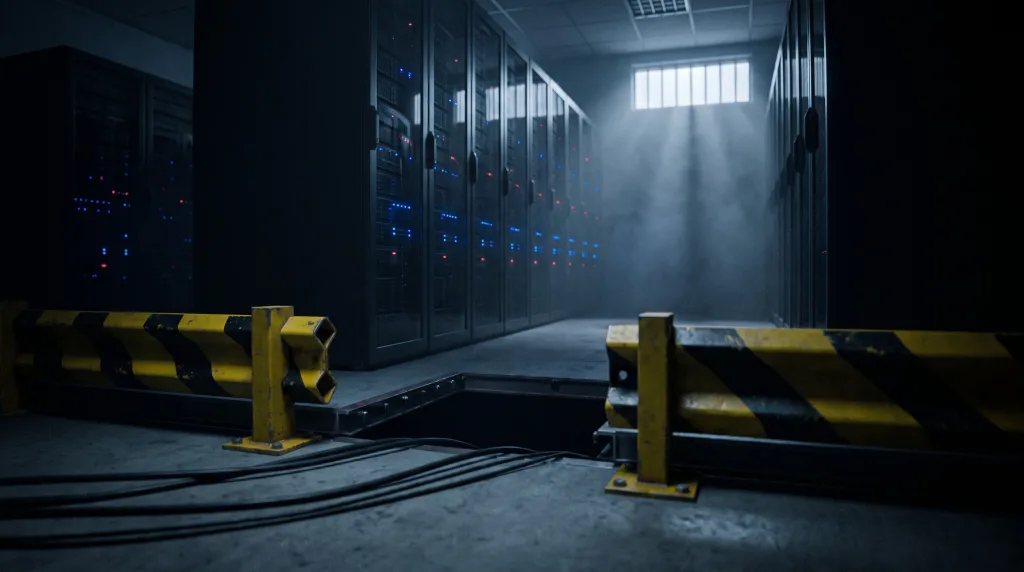
Monday morning, 9 a.m. Samuel, the CEO of an industrial SME, has not even put down his coffee when his head of marketing walks in, phone in hand. “Have you seen this? An engineer just resigned from Anthropic. He writes that they are playing Russian roulette with our lives. Fifty-seven million people have read his message. And we roll AI out to the teams next week.”
Samuel puts down his coffee. He already knows that look on his people’s faces. He saw it the day he acquired his competitor, then when the plant switched ERP. It is fear, and it has just walked into his office through a viral thread.
A 27-year-old engineer, 57 million views
The fact is real and verifiable. Jacob Coxon, a 27-year-old British engineer, spent three years on model pre-training, first at OpenAI, then at Anthropic. In September 2026 he left the industry and posted a series of messages on X. The result: more than 57 million views in under twenty-four hours (Newsweek). His accusation fits in one line: both labs are “racing straight toward a self-improving superintelligence” and “gambling with our lives” (France24).
He adds a chilling detail. According to him, some colleagues use two words for the trajectory: “crunchtime,” the decisive moment, and “endgame” (France24). In a rare move, an Anthropic safety lead, Evan Hubinger, publicly agreed with him. He puts the risk of AI causing human extinction by the end of the decade at “more than 10 percent,” while judging the risk from current models to be low (CNBC). Anthropic, he says, is doing “its best” but has “no plan yet” to ensure that an AI surpassing humans still obeys its designers (Deadline).
That is the message your teams read this weekend. For you, as a leader, the immediate stake sits somewhere other than settling that debate: it sits in what this thread does, on Monday morning, inside your teams.
Panic is directly linked to the survival instinct
For years I have walked into organizations where AI stirred the same trouble. The mechanics repeat. When management has not said clearly how AI will be used, and to what end, that vacuum fills on its own. It fills with the oldest fear: becoming obsolete, being replaced, watching the company disappear. Panic is directly linked to the survival instinct. A viral thread about human extinction presses that button with a force few internal memos will ever match.
The figures I cite in (My book, chapter 14) already showed it before the Coxon affair: AI-related nervousness, measured by Stanford’s AI Index, rose from 38 percent to 52 percent in a single year. A media episode of this size acts as an accelerant. Your job is not to deny the fear. Your job is to give it a frame before it takes up all the space.

Two debates you must not confuse
There are in fact two conversations in this news, and blending them leads to paralysis.
The first is the existential debate. It is serious, it divides sincere researchers, and it plays out at the level of states and labs. Coxon himself judges that no company can develop superhuman AI responsibly on its own, without state intervention or a coordinated slowdown (France24). That debate is beyond you as the head of an SME or mid-market firm, and there is nothing wrong with that.
The second conversation is quieter, and it concerns you directly. Other voices recall that the focus on “existential risk” can work as a marketing narrative, drawing attention away from harms already here: water use by data centers, disinformation, effects on attention, jobs (Le Devoir). Whichever side you lean toward, one fact remains. While we stare at the distant horizon, your teams live an immediate and very concrete worry.
Neither guru nor prophet of doom
I built my whole practice against two characters. The first is the AI guru, the one who promises to make you rich in twenty minutes and parades dreamlike images as if beauty were a strategy. The second has just appeared with the Coxon affair: the prophet of doom, the one who turns a real risk into complete paralysis.
Both disarm you. The first feeds the illusion, the second feeds the panic. Naming a danger and staying frozen by it are two different acts. I have named dangers for a long time, from brain-computer interfaces to the technological dependencies between American and Chinese solutions. Naming, yes. Freezing, never. Between euphoria and shock lies a third path, less spectacular and far more useful: discipline.
What history has already settled
Every major technological leap produced its wave of terror. The car was going to ruin those who lived off horses. The personal computer was going to make secretaries useless. Each time, two symmetrical errors spread: believing nothing would change, and believing everything would collapse. Reality followed a third road, that of jobs which shift and recompose, often in greater number. Robots will even have to offset the collapse of births in developed countries; AI alone will not fill the open positions, far from it. This long memory does not downplay the risk Coxon describes. It reminds us that a leader is paid to keep a cool head when fifty-seven million screens display the same dread at the same moment.
What a leader actually does on Monday morning
Back to Samuel. His rollout, planned for the following week, did not need to be canceled. It needed to be preceded by two moves, in this order.
First, a vision. Your people want to know one thing above all others: will this technology erase me, or amplify me? As long as management leaves the question open, each person invents their own answer, and the worst scenario always wins. A clear vision answers the fear of obsolescence before a viral thread triggers it.
Then, communication. La Poste defined its AI strategy in July 2023 and only told its teams at rollout, in January 2024. The immediate result: a strike. Silence from the top is the first sign a transformation will fail. I say what I do, and I do what I say. That simple rule weighs more than every tool on the market combined.
Then comes method. Build an exploration team, your enthusiasts and early adopters, and give it two questions, only two. How can I use AI to increase my productivity and the quality of what I deliver in my current role? And what can I do now with AI that was impossible before? Any use that answers neither question is a distraction. Measure before, during, and after. Assumptions are dangerous, kill them with experimentation as early as you can. I lay out this five-step approach in (My book).
One last point, the most human of all. Build the psychological safety that lets an employee say out loud: “this thread scared me.” A named fear can be treated. A silent fear turns into quiet resistance, then into a silent departure.
The essentials
Remember three things:
- Panic about AI is a survival-instinct signal, not a whim; it grows in the vacuum left by the absence of vision and communication.
- The extinction debate plays out at the level of states and labs; your ground is the concrete worry of your teams, here and now.
- Refuse the two symmetrical traps, the guru selling a dream and the prophet selling the end of the world, then answer with vision, communication, and measured experimentation.
Samuel kept his rollout. He preceded it with a meeting where he showed the Coxon thread himself, hiding nothing, before laying out his vision and opening the floor. You do not have to predict this future, because you are going to build it. Innovate or agonize, the choice is yours.

References
- (My book) https://philippeboulanger.com/book/
- (Newsweek) https://www.newsweek.com/anthropic-researcher-quits-warns-ai-could-kill-everyone-12418798
- (CNBC) https://www.cnbc.com/2026/09/09/anthropic-researcher-quits-ai-safety.html
- (France24) https://www.france24.com/fr/info-en-continu/20260909-elles-jouent-avec-nos-vies-après-openai-un-chercheur-en-ia-quitte-anthropic
- (Deadline) https://deadline.com/2026/09/anthropic-jacob-coxon-resignation-artificial-intelligence-1237072134/
- (Le Devoir) https://www.ledevoir.com/economie/techno/1007621/elles-jouent-vies-chercheur-ia-quitte-anthropic