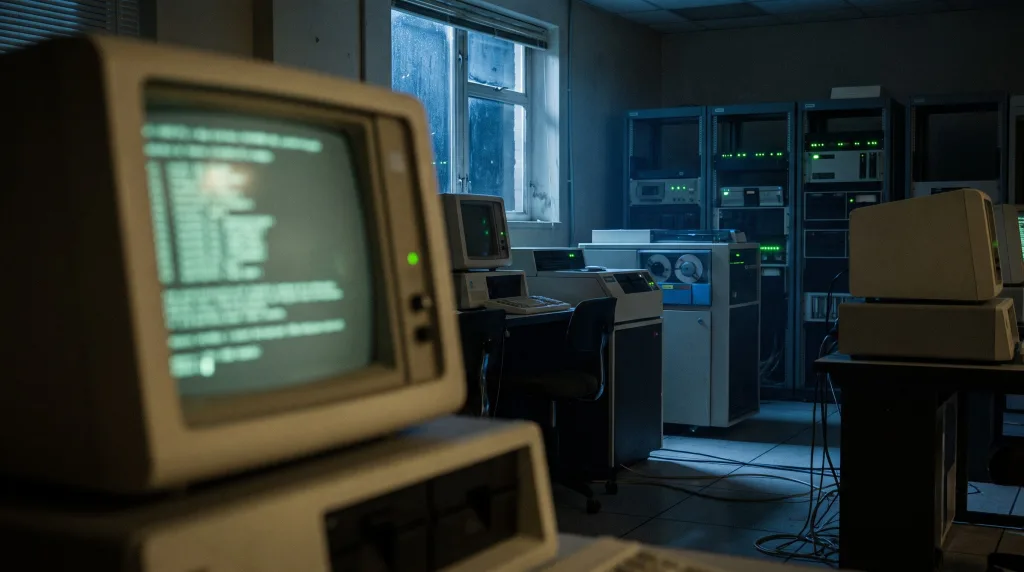
Cupertino office, a morning in 2003. Julien (not his real name) sets a frame on my table. A granted patent, with the seal of the U.S. office, the number, the date. He is beaming like a father watching a first step.
“That’s it,” Julien says. “We’re protected, nobody can copy us.
– Congratulations. And how many have you sold?
– Sold? We just got it.
– So, for now, you own the exclusive right to sell a product nobody buys yet.”
The silence that followed was worth every market study in the world. Julien was confusing two things my life as an engineer, then as an executive, taught me to keep apart: owning an idea, and holding a market. The first is signed at a lawyer’s office. The second is won outside, in the customer’s hand, one gesture at a time.
The wall of framed patents
I have seen many walls like Julien’s. Whole corridors of framed patents, lit like trophies, inside companies that were losing ground every quarter. A patent on the wall reassures a board. It gives the illusion of a lead. It flatters what I call, in my daily work, the status-quo bias: the comfortable belief that the current order works in our favor.
Winston Churchill already described the entrepreneur as seen “as a man to be shot down, or a cow to be milked.” A patent looks like a fence around that cow. A fence reassures the owner. It does not make a single extra customer drink. And while everyone admires the fence, a competitor is building a road.
4,400 patents, one mousetrap that wins
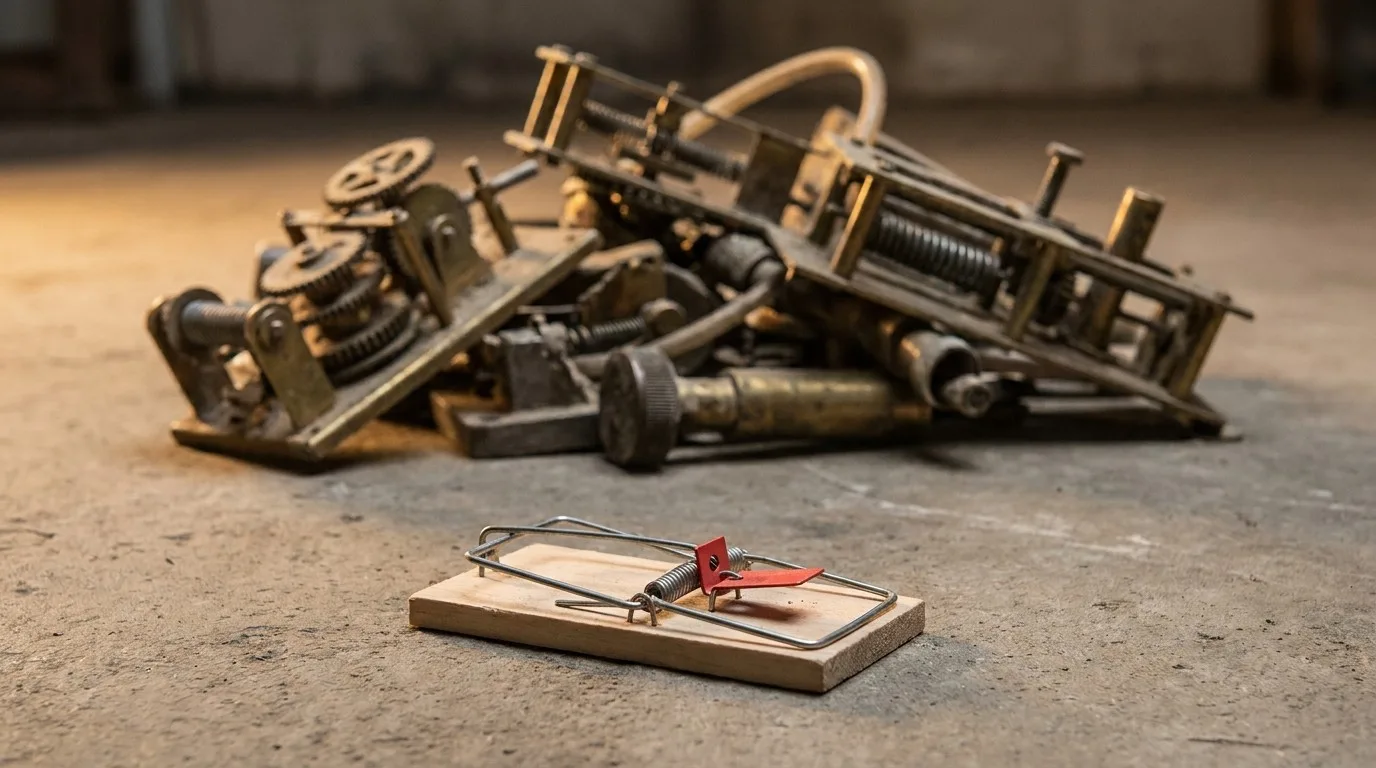
Since 1838, the U.S. Patent Office has granted more than 4,400 mousetrap patents, 95 percent of them to amateur inventors (Smithsonian Magazine). The mousetrap is by far the most invented machine in American history. Yet one object still crushes that mountain of ideas: the wooden snap trap, patented in 1903 by John Mast and manufactured ever since in Pennsylvania under the Victor brand.
Here is the number that belongs in every R&D meeting room: of those 4,400 patents, fewer than two dozen ever earned their creator a cent (American Heritage). Sit with that for a second. Each inventor held a legal monopoly. Each held, on paper, a better idea: cleverer, faster to reset. And almost all of them failed against a piece of wood and a spring worth a few cents.
Why? Because the customer felt no gap. His mousetrap worked, cost almost nothing, and was thrown away without a second thought. An invention that solves a problem the customer already considers settled becomes unsellable, no matter how many official seals it carries.
In my book, I devote a whole chapter to separating three words people confuse constantly: creativity, invention, and innovation (chapter 3, my book). (Book) Creativity imagines. Invention formalizes something new and protects it three ways: patent, copyright, or trade secret. Innovation is measured by one yardstick only: reaching the market. A patent validates your invention. It says nothing about your innovation.
A patent protects, it does not sell
Contrary to a widespread belief, a granted patent does not stop a third party from copying you. It gives you ground to defend yourself before a competent court, provided you have the money to do so. Some large companies know this game well: they let the procedure drag, inflate the costs, and push the smaller player toward the exit before any ruling.
A patent also exposes the details of your process to the whole world. A competitor can draw from it, design around it with another method, or exploit it in a territory your filing does not cover. A former executive of a large Dutch group once described their internal doctrine to me, “proudly stolen elsewhere”: for each invention spotted, a risk analysis to see whether the patent is avoidable and whether the game is worth the candle (my book, chapter 3). (Book)
The market does not read patents. It looks at price, use, and the simplicity of the gesture. If your invention costs more and asks more effort than the standard in place, the exclusive right to sell it weighs nothing. The customer keeps his habit. He stays in his comfort zone, the status quo my whole practice tries to flush out.
The Segway, a perfect invention with no ecosystem
December 2001. Dean Kamen unveils the Segway as the machine that will redraw cities. His circle promises 10,000 units sold per week and a billion dollars in revenue (FourWeekMBA). Reality fit in a footnote: fewer than 24,000 units in four years (FourWeekMBA).
The Segway worked. The patent held. The block lived elsewhere: no dedicated lane, no clear regulation, and no reason strong enough to pay 5,000 dollars to replace walking (Forbes). An invention can solve a real problem and stay unusable as long as the ecosystem that carries it does not exist yet: the infrastructure, the rules, the shared habits. The Segway was waiting for a world that was not ready. That world eventually arrived, in the shape of electric scooters at a tenth of the price, which captured the very use the Segway dreamed of inventing.
The Segway sits in my personal list of products that ended up in the bin, next to the Apple III, the Lisa, the Newton, and the Pippin, which I watched up close during my career (my book, chapter 3). (Book) None of them lacked patents. All of them lacked a market ready to receive them.
The Betamax, when the patent becomes the trap
1975. Sony launches the Betamax. A year later, JVC answers with VHS. The Betamax offered a better picture, and Sony held solid patents on its format (ANSI). Sony kept its licenses tight to protect its intellectual property, reserving production for a small circle. JVC did the opposite: it opened VHS to Panasonic, Sharp, Mitsubishi, Zenith, and many others (ANSI).
The outcome played out as a loop. More VHS makers, so prices fall. Lower prices, so more households equip. More households, so more rental cassettes, so more titles released on VHS, so even fewer reasons to buy a Betamax. By 1984, 70 percent of video rentals in the United States were on VHS. The technically superior format became a museum piece, because its creator refused to share the market.
Here is the paradox I want carved in: the patent and its jealous protection became the direct cause of failure. Sony chose to own rather than spread. JVC chose to spread rather than own. The market rewarded spreading. I spent years at Sony, I launched the VAIO and the Aibo in Europe, and I can tell you the engineering talent was never the problem. The sharing strategy was.
Adoption is human, never legal
Mousetrap, Segway, Betamax: three stories, one root. The invariant of innovation was never the technology or the title of ownership. It is the human being, with their habits, fears, and biases. A customer does not adopt a patent. They adopt a gesture simpler than yesterday’s, or they do not move.
Peter Drucker put it his way: “Culture eats strategy for breakfast.” I extend it: use eats the patent for breakfast. A patent lives in a legal department. Adoption runs across price, distribution, communication, and the customer’s daily life. That is why I keep telling leaders that innovation is transversal: it runs across the whole organization, or it does not happen. If one link is missing, your monopoly protects an object nobody picks up.
So test early. Kill your assumptions with experimentation before they kill your project. Before you even file, ask yourself two simple, verifiable questions: does my customer really live the problem I claim to solve, and does my product make their gesture simpler than today? If the answer hesitates, no official seal will make it firm.
Exercise
Take your favorite innovation, the one you defend in meetings. Rate it 0 to 5 on three axes: does the customer feel the problem (0: not at all, 5: daily pain)? Is the gesture simpler than the habit (0: more complicated, 5: obvious)? Does the ecosystem already exist (0: everything to build, 5: everything ready)? Below 3 on any single axis, your patent protects a bet, not a product. I am not always at 5 either, and that is exactly where the work begins.
The essentials
Remember three things:
- A patent grants a legal monopoly on an idea, not proof of demand. Of more than 4,400 mousetrap patents, fewer than twenty ever earned their inventor a cent.
- A brilliant invention fails if it costs more, complicates the customer’s gesture, or waits on an ecosystem that is missing, like the Segway for twenty years.
- Over-protecting can kill: the Betamax lost to VHS because Sony kept its license closed while JVC opened its own.
A patent defends a position. It does not create desire. Desire is won on the ground of use, where your customers decide, every day, to change their gesture or keep the old one. Innovate or agonize, the choice is up to you.



References
- (My book) philippeboulanger.com/book
- (Smithsonian Magazine) smithsonianmag.com/smithsonian-institution/unceasing-american-quest-build-better-mousetrap-180957208
- (American Heritage) americanheritage.com/better-mousetrap
- (Forbes) forbes.com/sites/adamhartung/2015/02/12/the-reason-why-google-glass-amazon-firephone-and-segway-all-failed
- (FourWeekMBA) fourweekmba.com/what-happened-to-segway
- (ANSI) blog.ansi.org/ansi/vhs-vs-betamax-standard-format-war